
Choosing the right solar inverter types is crucial for your DIY solar setup’s success. Whether you’re powering your RV or building a home backup system, understanding the difference between pure sine wave and modified sine wave inverters will save you money and prevent equipment damage.
In this comprehensive guide, we’ll break down everything you need to know about these two main inverter technologies. By the end, you’ll know exactly which type fits your budget, power needs, and appliance requirements.
What Are Solar Inverter Types and Why Do They Matter?
Solar inverters convert DC power from your batteries into AC power that runs your household appliances. However, not all inverters create the same quality of AC power. This is where solar inverter types become critical to understand.
The quality of your AC output affects everything from your refrigerator’s efficiency to whether your laptop charger works properly. Let’s explore the two main categories that dominate the DIY solar market.
Pure Sine Wave Inverters: The Gold Standard
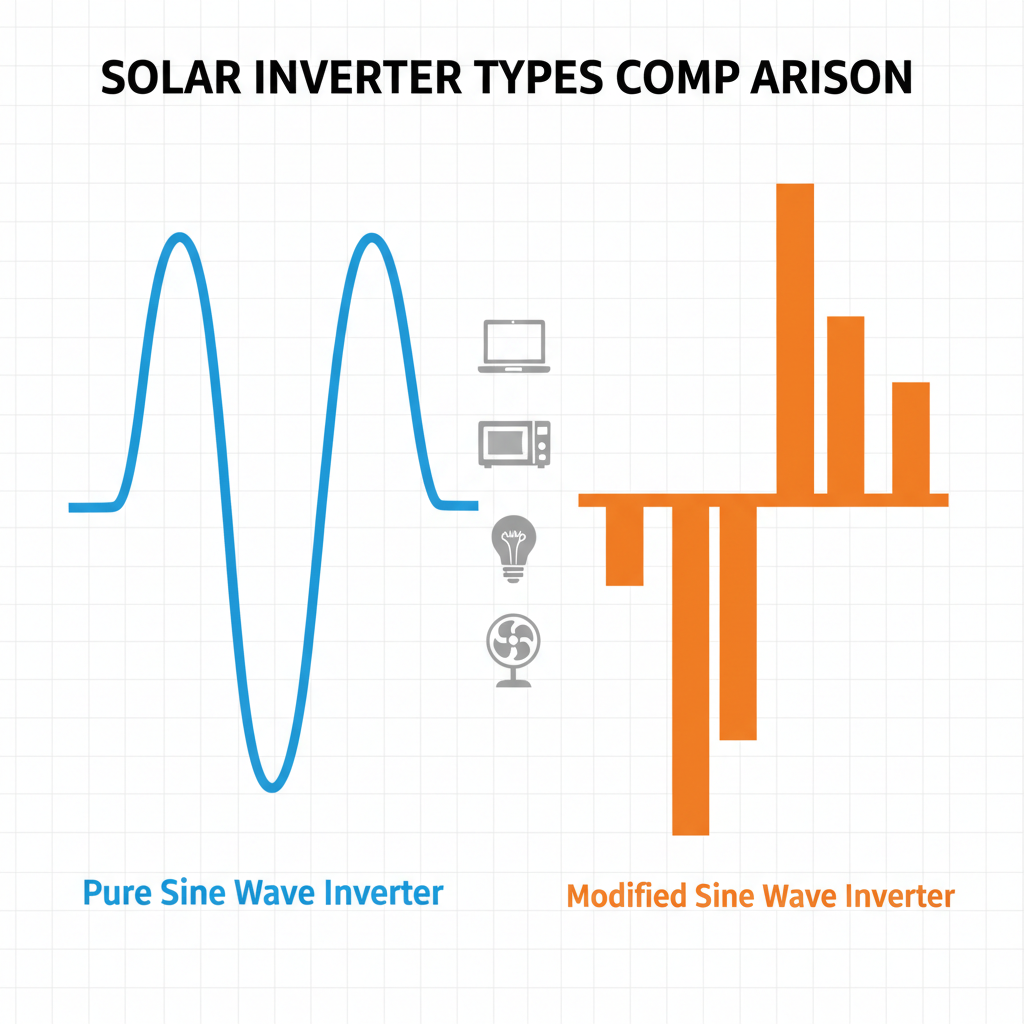
Pure sine wave inverters produce AC power that’s identical to what comes from your utility company. The electrical waveform is smooth and consistent, creating a perfect sine wave pattern.
This clean power output makes pure sine wave inverters compatible with virtually every electronic device and appliance. From sensitive medical equipment to high-end audio systems, everything runs smoothly on pure sine wave power.
Key Benefits:
- Universal compatibility with all appliances
- Reduced electrical noise and interference
- Maximum efficiency from motors and transformers
- Longer appliance lifespan
- Quieter operation of fans and motors
Modified Sine Wave Inverters: The Budget Option
Modified sine wave inverters create a stepped approximation of a sine wave. Instead of the smooth curve of pure sine wave power, these units produce a blocky, stepped pattern that resembles a sine wave.
While this power works for many basic appliances, it’s not suitable for everything. The stepped waveform can cause issues with sensitive electronics and reduce the efficiency of some devices.
Key Characteristics:
- Significantly lower cost than pure sine wave
- Works well with resistive loads (heaters, incandescent bulbs)
- Can cause problems with electronic devices
- May produce audible humming in some appliances
- Less efficient operation of certain motors
Which Appliances Work Best with Each Solar Inverter Type?
Understanding appliance compatibility is essential when selecting between solar inverter types. Let’s break down what works well with each option.
Pure Sine Wave Compatible Appliances
Pure sine wave inverters handle everything, but they’re especially important for:
- Sensitive Electronics: Laptops, tablets, phone chargers, LED TVs
- Medical Equipment: CPAP machines, oxygen concentrators
- Kitchen Appliances: Microwave ovens, coffee makers, blenders
- Power Tools: Variable speed tools, laser levels
- Audio/Video Equipment: Sound systems, gaming consoles
Modified Sine Wave Suitable Appliances
These basic appliances typically work fine with modified sine wave power:
- Lighting: Incandescent bulbs, some LED lights
- Heating: Space heaters, electric blankets
- Simple Motors: Basic fans, water pumps
- Battery Chargers: Simple tool chargers (check manufacturer specs)
Appliances to Avoid with Modified Sine Wave
Never use modified sine wave inverters with:
- Laser printers
- Digital clocks (may keep incorrect time)
- Bread makers with digital controls
- Variable speed tools
- Some fluorescent lights
- Devices with switching power supplies
Cost Comparison: Pure Sine vs Modified Sine Wave Inverters
Budget is often the deciding factor when choosing between solar inverter types. Let’s look at real-world pricing to help you make an informed decision.
Modified Sine Wave Pricing
Modified sine wave inverters typically cost 30-50% less than pure sine wave units. For example:
- 1000W modified sine wave: $80-120
- 2000W modified sine wave: $150-250
- 3000W modified sine wave: $200-350
Pure Sine Wave Pricing
Pure sine wave inverters command premium pricing but offer superior performance:
- 1000W pure sine wave: $150-250
- 2000W pure sine wave: $300-500
- 3000W pure sine wave: $450-700
While the upfront cost is higher, pure sine wave inverters often save money long-term by preventing appliance damage and improving efficiency.
Power Needs Assessment for Your Solar Setup
Before selecting your inverter type, you need to understand your power requirements. This ties directly into your overall system planning, which we’ve covered extensively in our solar panel sizing guide.
Calculate Your Inverter Size Requirements
Start by listing all appliances you’ll run simultaneously. Add their wattage requirements, then multiply by 1.25 for a safety margin. This gives you your minimum inverter capacity.
For detailed power calculations, check out our comprehensive power needs calculator to ensure your inverter matches your system’s overall capacity.
Surge Power Considerations
Many appliances need extra power during startup. Motors, compressors, and pumps often require 2-7 times their running wattage for a few seconds. Both inverter types handle surge loads, but specifications vary significantly between models.
Making the Right Choice for Your DIY Solar Project
Choosing between solar inverter types depends on your specific situation. Here’s how to decide:
Choose Pure Sine Wave If:
- You’re powering sensitive electronics
- Your budget allows for the premium
- You want universal appliance compatibility
- You’re building a primary power system
- Efficiency and appliance longevity matter
Consider Modified Sine Wave If:
- Budget is your primary concern
- You’re only powering basic appliances
- You’re building an emergency backup system
- Your power needs are temporary or seasonal
Hybrid Approach for Larger Systems
Some DIY builders use both types strategically. They might use a pure sine wave inverter for sensitive electronics and a modified sine wave unit for basic loads like lighting and heating.
Installation and Maintenance Tips
Regardless of which inverter type you choose, proper installation ensures optimal performance and safety.
Proper Wiring Practices
Clean, secure connections are crucial for inverter performance. Avoid the common wiring mistakes we outline in our solar panel wiring guide.
Ventilation and Heat Management
All inverters generate heat during operation. Ensure adequate ventilation around your unit. Pure sine wave inverters typically run cooler than modified sine wave units due to their more efficient design.
Regular Maintenance
Keep your inverter clean and check connections periodically. Most quality units require minimal maintenance, but regular inspections prevent small issues from becoming major problems.
Future-Proofing Your Inverter Investment
Technology evolves rapidly in the solar industry. When choosing between solar inverter types, consider your future needs alongside current requirements.
Pure sine wave inverters offer better compatibility with newer appliances and emerging technologies. If you plan to expand your system or add more sophisticated devices, the extra investment often pays dividends.
Conclusion: Your Path to the Right Inverter Choice
Understanding the differences between pure sine wave and modified sine wave inverters empowers you to make the best choice for your DIY solar project. Pure sine wave units offer superior compatibility and performance, while modified sine wave inverters provide budget-friendly power for basic applications.
Remember, your inverter choice affects your entire system’s performance. Take time to assess your power needs, consider your appliances, and factor in your budget. With the right inverter, you’ll enjoy reliable, clean power for years to come.
Ready to start building your solar system? Use these insights to select the perfect inverter type for your unique situation. Your appliances – and your wallet – will thank you for making an informed decision.