
Let me guess. Your solar panel cleaning routine involves dragging out the pressure washer like you’re detailing a race car. Been there, done that, nearly cracked a panel.
Here’s the uncomfortable truth: most of us overthink cleaning solar panels. But dirty panels really can lose 20% efficiency, so ignoring them isn’t the answer either.
I learned this the expensive way after spending a weekend “deep cleaning” my array with every tool in my garage. Spoiler alert: soap residue made things worse.
When Solar Panel Cleaning Actually Matters
Not all dirt is created equal. Bird droppings? Clean immediately. Light dust from a dry spell? Your panels probably don’t care as much as you think.
The 20% efficiency loss everyone quotes comes from heavy soiling. We’re talking months of neglect, construction dust, or living downwind from a dirt road.
Most residential panels lose 2-5% efficiency from normal dust buildup. That’s annoying, but not emergency territory.
Here’s what actually drops your power output fast:
- Bird droppings (they bake on in the sun)
- Sticky tree sap or pollen
- Construction dust
- Snow that won’t slide off
- Leaves stuck to the frame
Everything else? Rain handles most of it. Mother Nature is surprisingly good at solar panel cleaning when you let her work.
The Two-Week Rule
Check your panels every two weeks. Not with a magnifying glass – just look up from your yard.
If you can clearly see dirt, debris, or bird gifts, it’s cleaning time. If they look reasonably clean from ground level, leave them alone.
This saves you from over-cleaning while catching the stuff that actually matters.
Solar Panel Cleaning Methods That Won’t Backfire
Forget everything you’ve read about special solar cleaning solutions. Most of that advice comes from companies selling cleaning products.
Here’s what actually works without creating new problems:
The Basic Clean (Works 90% of the Time)
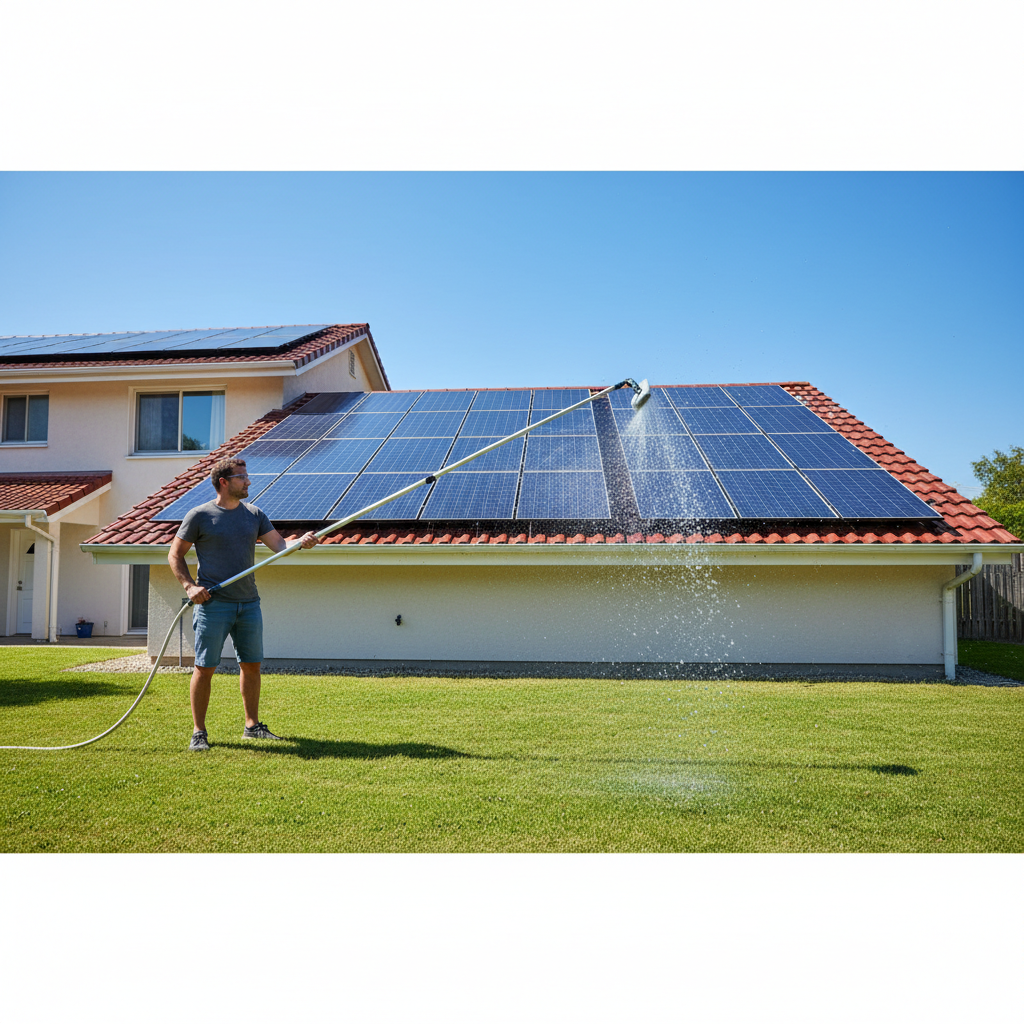
Garden hose with a spray nozzle. That’s it.
Early morning or evening when panels are cool. Hot glass plus cold water equals potential cracking – learned that one the hard way too.
Spray from the top down, letting gravity do most of the work. Don’t blast the water directly at junction boxes or wiring connections.
When You Need More Than Water
Sometimes water alone won’t cut it. Bird droppings and tree sap laugh at gentle spray nozzles.
Here’s the escalation ladder:
- Warm water (not hot)
- Soft brush or squeegee on an extension pole
- Tiny amount of dish soap if absolutely necessary
- Professional cleaning service for stubborn problems
That extension pole is crucial. Climbing on your roof for solar panel cleaning isn’t worth the risk. Trust me on this one.
What Not to Use (Seriously)
Pressure washers can damage panel seals and frames. Skip them.
Abrasive cleaners or scrubbing pads will scratch the glass. Your panels aren’t cast iron skillets.
Automatic sprinkler systems sound clever but create water spots that reduce efficiency. The irony is real.
Cold water on hot panels. Physics says no.
DIY Solar Panel Cleaning: The Reality Check
Most online guides make solar panel cleaning sound like rocket surgery. It’s not.
But it’s also not completely mindless. You’re working around electricity, potentially on a roof, with equipment that costs thousands of dollars.
Here’s my reality-tested approach:
Safety First (No Heroics)
Turn off your system before cleaning. Yes, really. Water and electricity don’t play well together.
If your panels are on a steep roof or higher than one story, hire professionals. Medical bills cost more than cleaning services.
Morning or evening only. Hot panels can burn you and crack from thermal shock.
The 5-Minute Assessment
Before grabbing any tools, figure out what you’re actually dealing with.
Light dust? Hose only.
Bird droppings? Soft brush and patience.
Heavy grime from construction or wildfires? Consider professional help.
If you properly sized your system using a solar panel sizing guide, losing a few percentage points to dirt shouldn’t cripple your power production. But clean panels are still better than dirty ones.
The Actual Cleaning Process
Start with the hose from the top of the array. Let water sheet down the panels naturally.
For stuck-on debris, use a soft brush or squeegee on an extension pole. Work systematically – one panel at a time.
If you absolutely must use soap, rinse thoroughly afterward. Soap residue creates its own efficiency problems.
Don’t forget to clean the area around your panels too. Dust on mounting hardware eventually blows onto the glass.
When to Skip Solar Panel Cleaning Entirely
Sometimes the best cleaning schedule is no cleaning schedule.
If you live somewhere with regular rain and minimal dust, nature probably has you covered. I know people in the Pacific Northwest who’ve never cleaned their panels and still get great production.
Also skip cleaning during extreme weather. Icy conditions, high winds, or excessive heat make the risk-reward ratio terrible.
If your system monitoring shows steady power production despite visible dirt, maybe that dirt isn’t hurting as much as you think.
The Diminishing Returns Problem
Here’s something most cleaning guides won’t tell you: obsessive cleaning can become counterproductive.
I’ve seen people clean their panels weekly, then wonder why their efficiency isn’t perfect. Meanwhile, they’re creating micro-scratches from over-handling and potentially damaging seals.
Clean panels when they need it, not because the calendar says so.
Seasonal Solar Panel Cleaning Strategy
Your cleaning needs change with the seasons, just like everything else about solar power.
Spring: Pollen Season
Tree pollen creates a sticky film that water alone won’t remove. This is when you might actually need that soft brush.
Clean after the pollen season ends, not during. You’ll just be fighting a losing battle otherwise.
Summer: Dust and Heat
Dry conditions mean more dust, but also more frequent afternoon thunderstorms in many areas.
Let nature do the work when possible. Clean early morning or evening only – never during peak sun hours.
Fall: Leaves and Debris
Focus on clearing debris from panel frames and mounting hardware. Leaves stuck around the edges can create shading issues.
This is also a good time to check for any damage before winter weather hits.
Winter: Snow and Ice
Don’t try to remove snow with tools. You’ll probably damage something.
Light snow often slides off on its own once panels warm up. Heavy snow might require professional removal or just waiting for a thaw.
Monitoring Your Cleaning Results
The only way to know if solar panel cleaning actually helps is to track your power production.
Check your system’s output before and after cleaning. If you don’t see a meaningful improvement, you might be cleaning panels that didn’t need it.
Most monitoring systems show daily production totals. Compare similar weather days before and after cleaning for the most accurate picture.
If you’re not monitoring your system performance yet, set that up first. A properly configured charge controller should give you the data you need.
When Professional Cleaning Makes Sense
Some situations call for professional help, and there’s no shame in admitting it.
Multiple-story installations, steep roofs, or panels covered in stubborn grime from wildfires or construction dust all qualify.
Professionals have the right equipment and insurance. Sometimes that peace of mind is worth the cost.
Just make sure they know what they’re doing. Not every window cleaning service understands solar panels.
The Bottom Line on Solar Panel Cleaning
Most DIY solar owners overthink panel maintenance. Clean them when they’re obviously dirty, use simple methods, and don’t obsess over perfection.
Your solar panel cleaning routine should take less time than checking your email. If it’s becoming a major project, you’re probably doing too much.
Focus on the stuff that actually matters: bird droppings, sticky debris, and obvious dirt buildup. Let rain handle the rest.
And remember – properly designed systems account for some efficiency loss from normal soiling. Your panels don’t need to sparkle to work well.