
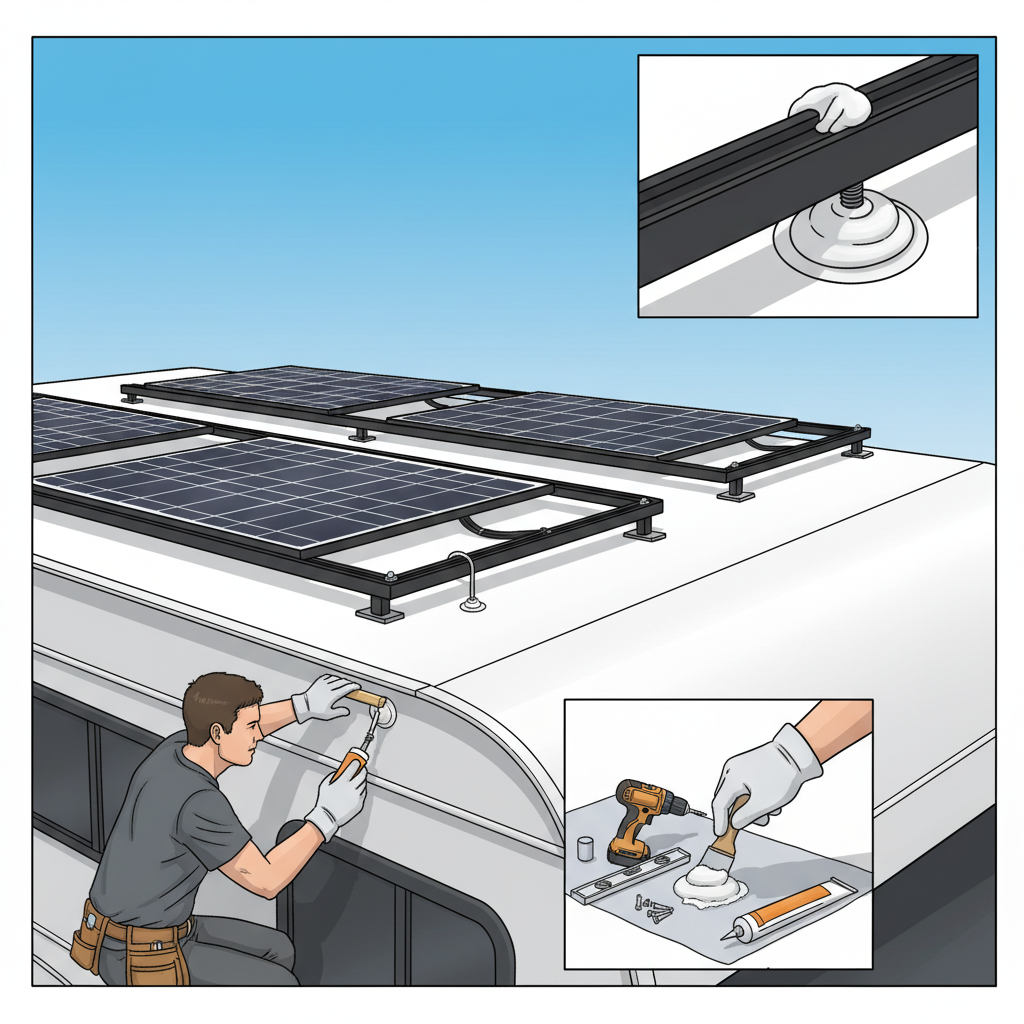
Installing solar panels on your RV roof doesn’t have to end in frustrating leaks and expensive repairs. With the right approach to RV solar install techniques, you can mount your panels securely while keeping water exactly where it belongs – outside your rig. I’ve helped countless RVers through this process, and I’m excited to share the proven methods that actually work long-term.
Nothing ruins a camping trip faster than discovering water damage from a poorly installed solar system. However, when you follow proper mounting procedures and use quality materials, your panels will stay put through highway winds and desert storms without letting a single drop inside.
Essential Tools and Materials for Leak-Free RV Solar Install
Before we dive into the installation process, let’s gather everything you’ll need. Having the right tools makes all the difference between a professional-looking job and a weekend nightmare.
Required Tools:
- Variable speed drill with bits (1/8″, 3/16″, pilot bits)
- Socket wrench set
- Measuring tape and pencil
- Level (2-foot minimum)
- Caulk gun
- Wire strippers and crimpers
- Safety equipment (harness, non-slip shoes)
Critical Materials:
- Solar panels and mounting rails
- Stainless steel lag bolts (1/4″ x 2.5″)
- Dicor lap sealant (white, self-leveling)
- 3M VHB tape for temporary positioning
- Butyl tape gaskets
- Cable entry gland
Quality matters enormously here. Cheap sealants fail within months, while premium products like Dicor can last decades. Trust me – spending an extra $20 on proper sealant beats tearing apart your ceiling later.
Planning Your Panel Layout and Power Requirements
Smart planning prevents costly mistakes. Start by determining how much solar power you actually need. If you haven’t already calculated this, check out our comprehensive Solar Panel Sizing: Calculate Your Power Needs Right guide to get accurate numbers.
Walk around your RV roof and identify potential mounting locations. Look for solid areas between roof ribs where you can hit structural supports. Avoid mounting over slide-outs, vents, or areas that flex when walked on.
Measure your available space carefully. Most RVs can accommodate 200-400 watts comfortably, but larger rigs might handle 600-800 watts. Remember to leave walking space for maintenance – you’ll need to clean these panels regularly.
Consider shading from roof accessories like air conditioners, satellite dishes, and vent covers. Even partial shading can significantly reduce output, so plan your layout accordingly.
Proper Drilling Techniques for RV Solar Install Success
This is where most DIYers get nervous, and rightfully so. Drilling holes in your roof feels scary, but following proper technique makes it safe and reliable.
Step-by-step drilling process:
First, mark your mounting points with a pencil. Double-check measurements because there’s no going back once you drill. Use a center punch to create a small dimple – this prevents your drill bit from wandering.
Start with a small pilot hole (1/8″) to verify you’re hitting solid material. If the bit drops through easily, you’ve hit a hollow area – move your mounting point slightly.
Gradually step up to your final hole size. Rush this process, and you risk cracking the roof material or creating oversized holes that won’t seal properly.
Clean out all debris immediately. Fiberglass shavings mixed with sealant create weak spots that fail over time.
Sealant Selection and Application Methods
Choosing the right sealant makes or breaks your RV solar install. I’ve tested dozens of products, and here’s what actually works in real-world conditions.
Dicor Self-Leveling Lap Sealant is my top choice for RV roofs. It stays flexible in temperature extremes, bonds well to common RV materials, and self-levels for a clean appearance. White color reflects heat and matches most RV roofs.
Application technique matters:
Clean the mounting area with isopropyl alcohol first. Any dirt, old sealant, or oxidation will compromise adhesion. Let it dry completely before proceeding.
Apply sealant generously around each hole before inserting bolts. Don’t worry about excess – we’ll clean that up later. The goal is complete coverage with no air pockets.
When tightening bolts, sealant should squeeze out around the edges. This confirms good coverage. However, don’t over-tighten – you’ll crack the roof material or squeeze out too much sealant.
Step-by-Step Mounting Process
Now let’s put it all together. Take your time here – rushing leads to mistakes that are expensive to fix.
Step 1: Position and secure rails
Place mounting rails in position using 3M VHB tape for temporary hold. This lets you verify everything aligns properly before committing to permanent mounting.
Step 2: Mark and drill mounting holes
Mark all hole locations through the rail mounting slots. Remove rails and drill pilot holes, then step up to final size as described earlier.
Step 3: Apply sealant and mount rails
Apply Dicor sealant around each hole and under the rail mounting feet. Insert lag bolts and tighten gradually in a cross pattern. This ensures even pressure distribution.
Step 4: Install panels on rails
Most mounting systems use end caps and mid clamps to secure panels to rails. Follow manufacturer specifications for torque settings – over-tightening can crack solar cells.
Step 5: Clean up excess sealant
Remove excess sealant while still wet using a plastic scraper. Mineral spirits on a rag cleans up any residue without damaging the roof surface.
Cable Management and Weatherproofing
Getting power from your panels into the RV requires careful attention to weatherproofing. A single poorly sealed wire entry can cause thousands in water damage.
Use a proper cable entry gland rather than just drilling a hole and hoping sealant works. Quality glands have rubber gaskets that compress around cables for waterproof seals.
Route cables along existing roof features when possible. This protects them from UV damage and reduces wind noise. Secure cables every few feet with appropriate clamps – loose cables eventually abrade and fail.
Inside the RV, connect to your charge controller using proper solar wiring techniques. Our guide on 5 Common Solar Panel Wiring Mistakes covers the electrical connections in detail.
Long-Term Maintenance for Leak Prevention
Even perfect installations need periodic maintenance to stay watertight. Schedule these tasks twice yearly for best results.
Inspect all sealant for cracks, gaps, or pulling away from surfaces. Dicor typically lasts 5-7 years before needing touch-ups, but harsh conditions may require more frequent attention.
Check mounting bolts for tightness. Temperature cycling and road vibration can loosen connections over time. Snug them up as needed, but don’t over-tighten.
Clean panels regularly for optimal performance. Our DIY Solar Panel Cleaning: Tools & Techniques guide shows you how to safely maintain your investment.
Troubleshooting Common Installation Issues
Even experienced installers occasionally run into problems. Here’s how to handle the most common issues:
Hitting wiring or plumbing: If your pilot hole reveals unexpected obstacles, plug the hole with sealant and move your mounting point. Better safe than sorry.
Uneven surfaces: RV roofs aren’t always perfectly flat. Use shims under mounting rails to ensure panels sit level and don’t bind.
Insufficient structure: If you can’t find solid mounting points, consider reinforcing the roof from inside with backing plates. This distributes load over larger areas.
Remember, there’s no shame in calling a professional if you encounter issues beyond your comfort level. A proper installation costs less than fixing water damage later.
Final Thoughts on RV Solar Install Success
Installing solar panels on your RV roof is absolutely achievable for DIY enthusiasts. The key is taking your time, using quality materials, and following proper techniques throughout the process.
Focus on getting the mounting and sealing right the first time. These fundamentals determine whether your system provides years of reliable service or becomes an expensive headache.
Once your panels are mounted and connected, you’ll join the ranks of RV solar users enjoying quiet, clean power wherever the road takes you. No more hunting for hookups or listening to generator noise – just pure energy independence.
Your RV solar install journey doesn’t end with mounting panels. Consider upgrading to an MPPT charge controller for maximum efficiency, and don’t forget about proper battery maintenance to protect your investment.