
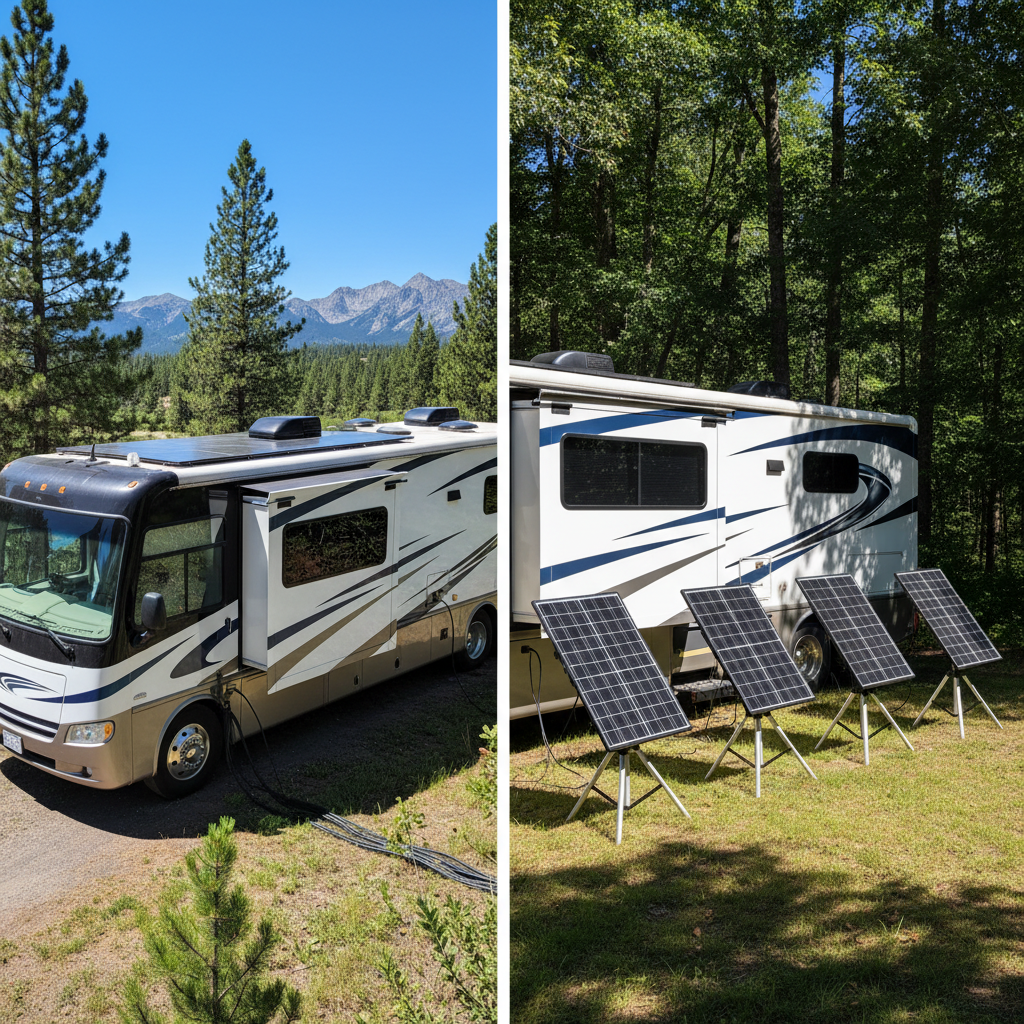
Planning your RV solar mounting strategy? You’re facing one of the most important decisions in your solar journey. Should you bolt panels permanently to your roof, or go with a flexible portable setup that you can move around?
Both approaches have their place in the RV world. Your choice depends on how you travel, where you camp, and what kind of power demands you have. Let’s break down everything you need to know to make the right decision for your adventures.
Understanding Your RV Solar Mounting Options
When it comes to RV solar mounting, you’ve got two main paths to consider. Each has distinct advantages that suit different camping styles and power needs.
Roof-mounted systems attach directly to your RV’s roof using brackets and mounting rails. These panels become part of your rig, traveling with you wherever you go. They’re always ready to collect power without any setup time.
Portable systems, on the other hand, consist of panels you can deploy on the ground or prop against your RV. These give you flexibility to position panels for optimal sun exposure, even when your RV is parked in shade.
Before You Choose: Calculate Your Power Needs
Before diving into mounting options, you need to understand your power requirements. Check out our comprehensive guide to calculate your power needs to determine how many watts you’ll need for your setup.
Roof-Mounted Solar Panels: The Permanent Solution
Roof-mounted panels offer the ultimate in convenience once installed. They’re always working when the sun shines, without any daily setup or takedown.
Advantages of Roof-Mounted Systems
Set-and-forget convenience: Once installed, roof panels require no daily attention. They start collecting power as soon as the sun comes up.
Security: Your panels are safely mounted high above potential thieves or curious animals. No worries about someone walking off with your investment.
Space efficiency: Roof mounting keeps your campsite clear. You don’t need to worry about panel placement or tripping over equipment.
Weather protection: Quality mounting systems secure panels against wind and weather. They’re built to handle highway speeds and harsh conditions.
Disadvantages of Roof-Mounted Panels
Shading limitations: When your RV is parked in shade, your panels are too. You can’t move them to catch available sunlight.
Installation complexity: Roof mounting requires drilling holes in your RV’s roof. This creates potential leak points if not done correctly.
Maintenance challenges: Cleaning panels on the roof requires climbing up there regularly. This can be dangerous and inconvenient.
Aerodynamic impact: Roof panels create wind resistance, potentially reducing fuel economy on travel days.
Portable Solar Panel Systems: Maximum Flexibility
Portable RV solar mounting solutions offer unmatched flexibility for optimizing power generation. These systems excel when you need to maximize every watt of available sunlight.
Benefits of Portable Solar Setups
Optimal positioning: You can always angle panels toward the sun and move them throughout the day for maximum efficiency.
Shade avoidance: Park your RV in the shade for comfort while placing panels in full sun for power generation.
Easy maintenance: Ground-level panels are simple to clean, inspect, and maintain without climbing on your roof.
Modular expansion: Start small and add panels as needed. Portable systems grow with your power requirements.
Multi-use capability: Use the same panels for home backup power, camping, or other applications beyond RV travel.
Drawbacks of Portable Systems
Daily setup required: You’ll spend time each day positioning panels and running cables. This gets old fast on frequent travel days.
Security concerns: Portable panels are tempting targets for theft. You need to secure or store them when away from your campsite.
Storage challenges: Panels take up interior space or external storage compartments. This reduces available room for other gear.
Weather limitations: Strong winds can damage unsecured portable panels. You may need to store them during storms.
Installation Complexity: What to Expect
The installation difficulty varies significantly between these two RV solar mounting approaches.
Roof-Mounted Installation Process
Installing roof panels requires careful planning and execution. You’ll need to locate roof rafters, seal penetrations properly, and ensure structural integrity.
Most installations involve mounting rails attached to your roof structure. Panels then clip onto these rails for a secure connection. Proper sealant application is critical to prevent water damage.
Consider hiring professionals for roof installations unless you’re confident in your skills. Water damage from poor sealing can cost thousands to repair.
Portable System Setup
Portable systems require minimal permanent installation. You’ll typically mount a charge controller and run cables to your battery bank.
However, you might want to install a dedicated inlet port for easy connection. This allows quick setup without opening compartments every time.
The wiring requirements are similar to roof systems. You’ll still need proper charge controller selection and battery connections.
Which RV Solar Mounting Style Fits Your Travel Style?
Your camping habits should drive your RV solar mounting decision more than any other factor.
Best Candidates for Roof-Mounted Systems
Frequent travelers: If you move camp every day or two, roof panels eliminate setup time and hassle.
Boondockers in open areas: When you typically camp in sunny, open spaces, roof panels provide reliable power generation.
Full-time RVers: Permanent roof installations make sense when your RV is your primary residence.
Convenience seekers: If you prefer simple, automatic systems, roof mounting delivers hands-off operation.
Ideal Situations for Portable Panels
Shade campers: If you prefer shaded campsites but still need solar power, portables let you have both.
Seasonal RVers: Part-time users can remove panels for home use during off-seasons.
Power optimization enthusiasts: Those who want maximum efficiency will appreciate the positioning flexibility.
Renters or borrowed RVs: Portable systems work great when you can’t modify the RV permanently.
Hybrid Approaches: Getting the Best of Both Worlds
Many experienced RVers eventually combine both mounting styles for maximum flexibility.
A common approach involves installing basic roof panels for everyday needs, supplemented by portable panels for high-demand situations. This gives you convenient base power with expansion capability.
Another hybrid option uses tilting roof mounts. These allow some angle adjustment while maintaining the security of roof installation.
Cost Considerations
Initially, portable systems often cost less since they don’t require professional installation. However, they may need additional accessories like stands, cases, and security systems.
Roof systems typically have higher upfront costs but lower long-term expenses. They don’t require replacement stands or storage solutions.
Consider the total cost of ownership, including installation, accessories, and replacement parts over time.
Maintenance and Longevity Factors
Both RV solar mounting options require ongoing maintenance, but in different ways.
Roof panels need regular cleaning and inspection, which can be challenging to access. However, they’re protected from ground-level hazards and accidental damage.
Portable panels are easy to maintain and clean but face more handling stress. Frequent setup and breakdown can lead to faster wear of connectors and frames.
Weather exposure differs too. Roof panels face constant UV and weather exposure, while portables can be stored during harsh conditions.
Don’t forget about battery maintenance requirements that apply to both systems.
Making Your Final Decision
The right RV solar mounting choice depends on balancing your priorities. Consider your typical camping style, power needs, and maintenance preferences.
If convenience and simplicity are paramount, roof mounting probably suits you best. For maximum power optimization and flexibility, portable systems offer unbeatable advantages.
Remember, you’re not locked into your first choice forever. Many RVers start with one approach and evolve their systems as they gain experience and their needs change.
Whatever you choose, proper sizing remains crucial. Make sure you’ve calculated your actual power requirements before committing to any mounting strategy. Your solar journey is unique, and the best system is the one that fits how you actually use your RV.