
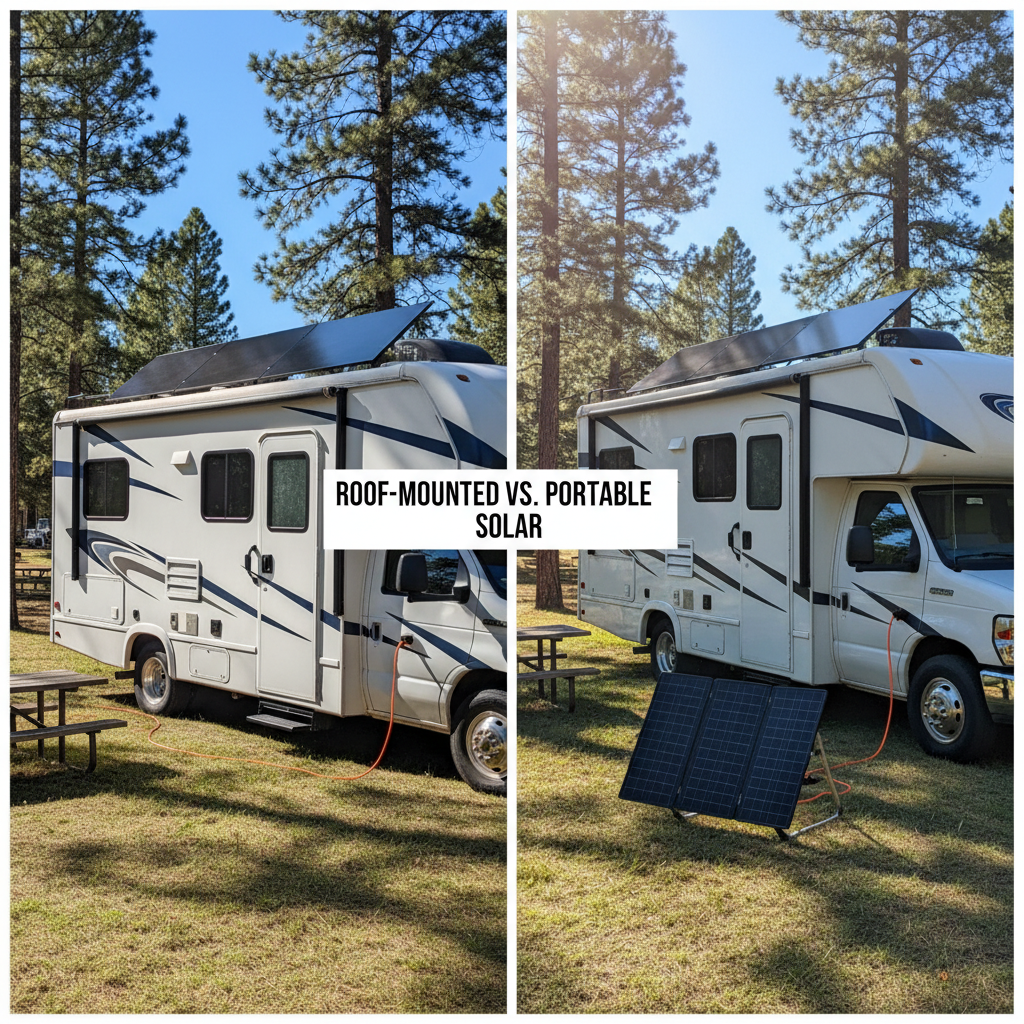
Choosing the right RV solar mounting system can make or break your off-grid adventures. Whether you’re a weekend warrior or full-time RVer, deciding between permanent roof-mounted panels and portable ground setups is crucial for your power independence.
Both mounting options have their place in the RV world. However, your travel style, budget, and power needs will determine which approach works best for you.
Understanding Your RV Solar Mounting Options
Before diving into the comparison, let’s clarify what we’re discussing. RV solar mounting comes in two main flavors: permanent roof installations and portable ground systems.
Roof-mounted systems involve securing panels directly to your RV’s roof using brackets, adhesive mounts, or tilt systems. Meanwhile, portable setups use foldable or rigid panels that you deploy on the ground when parked.
Each approach serves different needs and lifestyles. Therefore, understanding both options helps you make an informed decision.
Roof-Mounted Solar: The Permanent Solution
Roof-mounted panels offer the ultimate convenience once installed. They’re always ready to generate power without any setup required.
Advantages of Roof Mounting
The biggest advantage is simplicity. You park your RV, and the panels immediately start collecting sunshine. There’s no daily setup or takedown routine.
Security is another major benefit. Your panels travel safely attached to your RV, eliminating theft concerns. Additionally, they’re protected from accidental damage during transport.
Roof mounting also maximizes your campsite space. Since panels sit overhead, you keep your entire outdoor living area free for activities, awnings, and relaxation.
Furthermore, permanent installations often look more professional and integrated. Many modern RVs come with solar-ready wiring, making roof installations straightforward.
Disadvantages of Roof Systems
However, roof mounting isn’t perfect. The main drawback is fixed positioning – your panels point wherever your RV faces.
Installation requires more commitment and skill. You’ll need to drill holes in your roof and ensure proper sealing to prevent leaks. This process can void warranties or cause expensive damage if done incorrectly.
Cleaning and maintenance become more challenging when panels sit 10+ feet overhead. You’ll need ladders and careful planning for routine upkeep.
Additionally, shading becomes problematic. If you park under trees for comfort, your roof panels might generate minimal power all day.
Portable Solar: Maximum Flexibility
Portable RV solar mounting systems offer unmatched flexibility for power optimization. These systems excel when you need maximum energy production regardless of parking conditions.
Benefits of Portable Systems
The primary advantage is positioning control. You can angle panels toward the sun throughout the day, maximizing energy harvest. This flexibility often results in 20-40% more power compared to fixed roof installations.
Shade avoidance becomes simple. Even if your RV sits under trees, you can position panels in sunny spots nearby. This capability proves invaluable in crowded campgrounds or forested areas.
Maintenance and cleaning are much easier at ground level. You can quickly wipe panels clean or inspect connections without climbing on your roof.
Installation is non-invasive. Portable systems don’t require drilling holes in your RV, preserving warranties and structural integrity. You simply run cables through existing openings or windows.
Moreover, portable panels can serve double duty. Use them for RV power and home emergency backup, maximizing your investment.
Drawbacks of Portable Mounting
The main disadvantage is daily setup and storage. You’ll spend time deploying panels each morning and securing them each evening.
Storage space becomes a consideration. Portable panels need interior or exterior storage when traveling, reducing available space for other gear.
Security concerns arise since panels sit unattended outside. Theft risk increases, especially in busy campgrounds or urban areas.
Weather vulnerability is another factor. Sudden storms or wind can damage improperly secured portable panels.
Cost Comparison: Initial Investment and Long-Term Value
Understanding the financial implications helps guide your RV solar mounting decision. Both options involve different cost structures.
Roof-mounted systems typically require higher upfront costs due to mounting hardware and professional installation. Expect to pay $200-500 extra for quality mounting systems and potential installation fees.
Portable systems often cost less initially since they include basic mounting hardware. However, you might need additional accessories like extension cables, portable battery banks, or protective cases.
Long-term value depends on usage patterns. Roof systems offer convenience value for frequent travelers, while portable systems provide performance value through better positioning.
Power Production Reality Check
Before making your choice, you need to understand your actual power requirements. Our comprehensive guide on solar panel sizing helps calculate your power needs right for your specific situation.
Portable systems generally produce 20-40% more power due to optimal positioning. However, this advantage only matters if you actually reposition panels throughout the day.
Roof systems provide consistent, predictable power output. While not optimized, they deliver reliable energy without daily intervention.
Installation Considerations for Each Mounting Type
Installation complexity varies significantly between mounting approaches. Consequently, your DIY skills and comfort level play important roles.
Roof Installation Process
Roof mounting requires careful planning and execution. You’ll need to locate roof structural members, ensure proper spacing, and waterproof all penetrations.
The process typically involves measuring, marking, drilling, sealing, and securing mounting brackets. Then you attach panels and run wiring to your charge controller location.
Common mistakes can prove costly. Our article on 5 common solar panel wiring mistakes helps you avoid expensive problems during installation.
Portable Setup Requirements
Portable systems require minimal permanent installation. You mainly need to establish a pathway for cables and install your charge controller.
Daily setup involves unfolding or positioning panels, connecting cables, and securing against wind. The process typically takes 10-15 minutes once you develop a routine.
Weather awareness becomes crucial. You’ll need to secure or retrieve panels during storms, adding complexity to your camping routine.
Performance Factors: Real-World Energy Production
Understanding actual performance helps set realistic expectations for your RV solar mounting choice.
Panel angle significantly impacts energy production. Fixed roof panels might operate at suboptimal angles, reducing output by 10-30% compared to properly angled installations.
Shading effects vary dramatically between systems. Roof panels suffer from RV air conditioners, vents, and nearby obstacles. Portable panels can avoid most shading issues through strategic placement.
Temperature considerations also matter. Roof panels often run hotter due to reduced airflow, slightly decreasing efficiency. Portable panels typically enjoy better cooling.
Seasonal Performance Variations
Winter conditions affect both systems differently. Roof panels might accumulate snow or ice, requiring removal for optimal function. Portable panels can be brushed clean easily but need protection from harsh weather.
For winter maintenance tips, check our guide on keeping your system running strong during cold months.
Summer heat impacts both mounting types. However, portable panels can benefit from better airflow and positioning away from heat-absorbing RV surfaces.
Matching Your Choice to Your Travel Style
Your camping habits should drive your RV solar mounting decision. Different travel styles favor different approaches.
Frequent movers benefit from roof-mounted convenience. If you change locations daily, avoiding setup routines saves significant time and effort.
Extended stay campers can maximize portable system benefits. When staying weeks in one location, optimized panel positioning pays dividends through increased power production.
Boondocking enthusiasts often prefer portable flexibility. The ability to position panels optimally while parking in shade for comfort proves invaluable in remote locations.
Hybrid Approaches
Many experienced RVers eventually adopt hybrid systems combining both mounting types. A modest roof array handles baseline needs while portable panels boost production when needed.
This approach offers redundancy and flexibility. If one system fails, you maintain some power generation capability.
Hybrid systems also allow gradual expansion. Start with either roof or portable panels, then add the other type as experience and needs grow.
Making Your Final Decision
Choosing between roof and portable RV solar mounting ultimately depends on prioritizing your specific needs and preferences.
Select roof mounting if you value convenience, security, and simplicity over maximum power production. This choice works well for frequent travelers who prefer minimal daily routines.
Choose portable mounting if power optimization, flexibility, and easy maintenance outweigh convenience factors. This option suits extended-stay campers and those camping in challenging shade conditions.
Consider starting with portable systems if you’re unsure. They require less commitment and can later complement a roof installation if your needs evolve.
Remember that both systems require proper charge controller selection and battery bank sizing to function optimally.
Whatever you choose, proper system design ensures reliable power for your adventures. Take time to plan carefully, and you’ll enjoy years of energy independence on the road.