
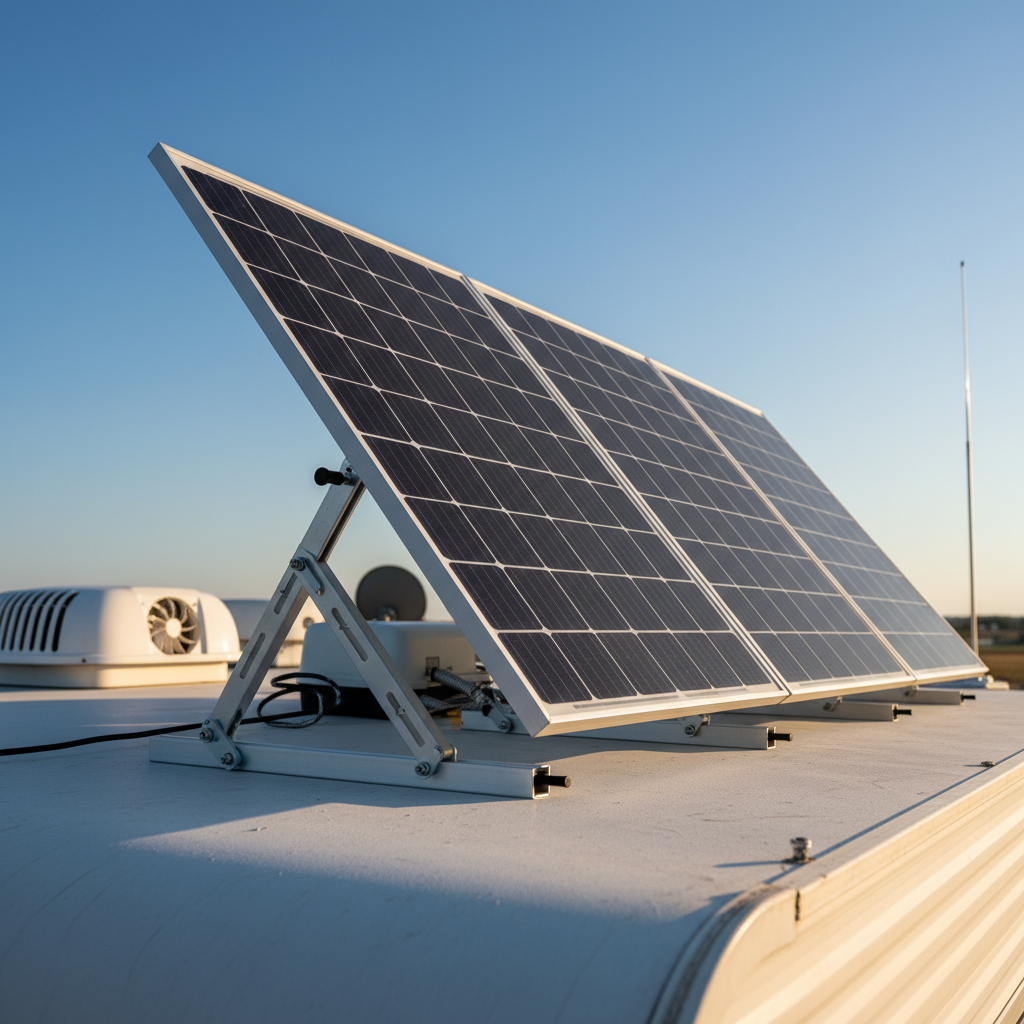
Want to squeeze every last watt from your RV’s solar setup? RV solar tilt mounts can dramatically increase your power generation, often by 20-30% or more. These adjustable mounting systems let you angle your panels toward the sun throughout the day and across different seasons.
As a fellow RVer who’s been tweaking solar setups for years, I can tell you that tilt mounts are one of the smartest upgrades you can make. They’re especially valuable if you’re boondocking for extended periods or trying to maximize power during those shorter winter days.
Let’s dive into everything you need to know about choosing, installing, and getting the most from your RV solar tilt mounts.
Why RV Solar Tilt Mounts Make Such a Difference
Solar panels produce maximum power when positioned perpendicular to the sun’s rays. However, most RV panels sit flat on the roof, missing out on optimal angles throughout the day.
Here’s what happens with tilt mounts:
- Morning and evening power increases significantly
- Winter performance improves when the sun sits lower
- You can adjust for your specific latitude and season
- Better snow shedding in cold climates
The power boost varies by season and location. In summer, you might see 15-25% improvement. During winter months, especially in northern latitudes, the difference can be 40% or more.
Understanding Solar Panel Angles and Positioning
Before installing tilt mounts, it helps to understand optimal panel positioning. The ideal angle typically equals your latitude plus 15 degrees in winter, or minus 15 degrees in summer.
For year-round RV travel, a good compromise is your latitude angle. If you’re at 40°N latitude, aim for about 40 degrees tilt.
However, don’t stress too much about perfect angles. Even a modest 20-30 degree tilt provides substantial benefits over flat mounting. The key is having the flexibility to adjust as needed.
Speaking of flexibility, proper solar panel sizing becomes even more important when you’re maximizing output with tilt mounts. You might find you need fewer panels than originally calculated.
Types of RV Solar Tilt Mounts Available
Several tilt mount options work well for RVs, each with different benefits and price points.
Manual Tilt Brackets
These simple, affordable mounts attach to your existing roof rails or mounting points. You manually adjust the angle using pins or wing nuts. They’re lightweight and easy to install.
Pros: Inexpensive, simple, reliable
Cons: Must be adjusted from the roof, limited angle options
Adjustable Tilt Frames
More sophisticated than basic brackets, these frames offer multiple angle settings and often better wind resistance. Many include quick-release mechanisms for faster adjustments.
Pros: Multiple angles, better stability, easier adjustment
Cons: Higher cost, more complex installation
Automatic Solar Trackers
These high-tech systems automatically follow the sun throughout the day. While they offer maximum power generation, they’re expensive and complex for most RV applications.
Pros: Maximum power output, no manual adjustment
Cons: Very expensive, complex, potential mechanical failures
Best Budget-Friendly RV Solar Tilt Mount Options
For most RVers, manual tilt brackets offer the best value. Here are some reliable options I’ve used or recommended:
Renogy Adjustable Solar Panel Tilt Mount
Solid construction with multiple angle settings. Works well with most panel sizes and roof configurations.
AIMS Power Adjustable Tilt Brackets
Simple design that’s easy to install and adjust. Good wind resistance for the price point.
WindyNation Tilt Mount Kit
Budget-friendly option that gets the job done. Perfect for smaller panels or testing the concept before upgrading.
Expect to spend $50-150 for quality manual tilt mounts, depending on panel size and features. That investment typically pays for itself within a year through increased power generation.
DIY Installation Tips for RV Solar Tilt Mounts
Installing tilt mounts isn’t rocket science, but proper technique ensures safety and optimal performance.
Planning Your Installation
Start by evaluating your existing solar setup. Consider panel placement, roof space, and clearance issues. You’ll need room for the panels to tilt without hitting roof accessories or each other.
Check your roof’s structural integrity. Tilt mounts create more wind load than flat panels, so secure mounting is crucial. If you’re unsure about your solar wiring setup, now’s a good time to review those connections too.
Installation Process
Most manual tilt mounts follow similar installation steps:
- Mark mounting points using the bracket as a template
- Drill pilot holes and apply sealant
- Secure brackets with appropriate fasteners
- Attach panels to brackets
- Test adjustment mechanisms
Always use proper sealants around mounting holes. Water damage from poor sealing costs far more than quality mounting hardware.
Safety Considerations
Working on RV roofs requires extra caution. Use proper fall protection, work on calm days, and never rush the job. If you’re not comfortable with roof work, hire a professional installer.
Consider the increased wind load when traveling. Most tilt mounts should be folded flat for highway speeds. Check manufacturer recommendations for your specific setup.
Calculating Optimal Angles for Maximum Power Output
Getting the most from your tilt mounts requires understanding when and how to adjust panel angles.
For seasonal adjustments, use these guidelines:
- Summer: Latitude minus 15 degrees
- Winter: Latitude plus 15 degrees
- Spring/Fall: Your latitude angle
Daily adjustments can boost output even more. In morning, tilt panels east. Around noon, position them flat or at seasonal angle. In afternoon, tilt them west.
However, don’t drive yourself crazy chasing perfect angles. Two or three adjustments per day provide most of the benefit without constant fussing.
Remember, your battery maintenance becomes more important when you’re generating extra power. Make sure your batteries can handle the increased charging.
Maintenance and Troubleshooting Common Issues
Tilt mounts require minimal maintenance, but regular attention keeps them working smoothly.
Monthly maintenance tasks include:
- Check all fasteners for tightness
- Lubricate adjustment mechanisms
- Inspect seals around mounting points
- Clean panels and check for damage
Common issues are usually simple fixes. Stiff adjustment mechanisms often just need cleaning and lubrication. Loose panels typically require fastener tightening.
Wind damage is the biggest concern. Always secure panels in travel position before moving. If you experience high winds while parked, consider lowering panels to reduce stress on mounts.
Real-World Results: What to Expect
In my experience, properly installed and adjusted tilt mounts deliver consistent results. During summer camping in Arizona, I’ve seen 20-25% power increases compared to flat mounting.
Winter camping in Colorado showed even bigger gains – sometimes 40% more power during short winter days. This extra generation extended our boondocking stays significantly.
The convenience factor matters too. Being able to adjust panels for morning coffee power or evening device charging makes RV life more comfortable.
Most RVers see payback within 6-12 months through reduced generator runtime and extended boondocking capabilities.
Making the Investment Decision
RV solar tilt mounts make sense for most solar-powered RVs, especially if you:
- Boondock regularly for 3+ days
- Travel during winter months
- Camp in northern latitudes
- Want to maximize existing panel investment
The upfront cost is modest compared to adding more panels. Plus, tilt mounts work with your existing setup – no need for complete system overhaul.
Start with manual brackets if you’re budget-conscious or new to solar adjustments. You can always upgrade to more sophisticated systems later.
Combined with proper system maintenance and smart energy management, tilt mounts help you get the most from every ray of sunshine hitting your RV.