
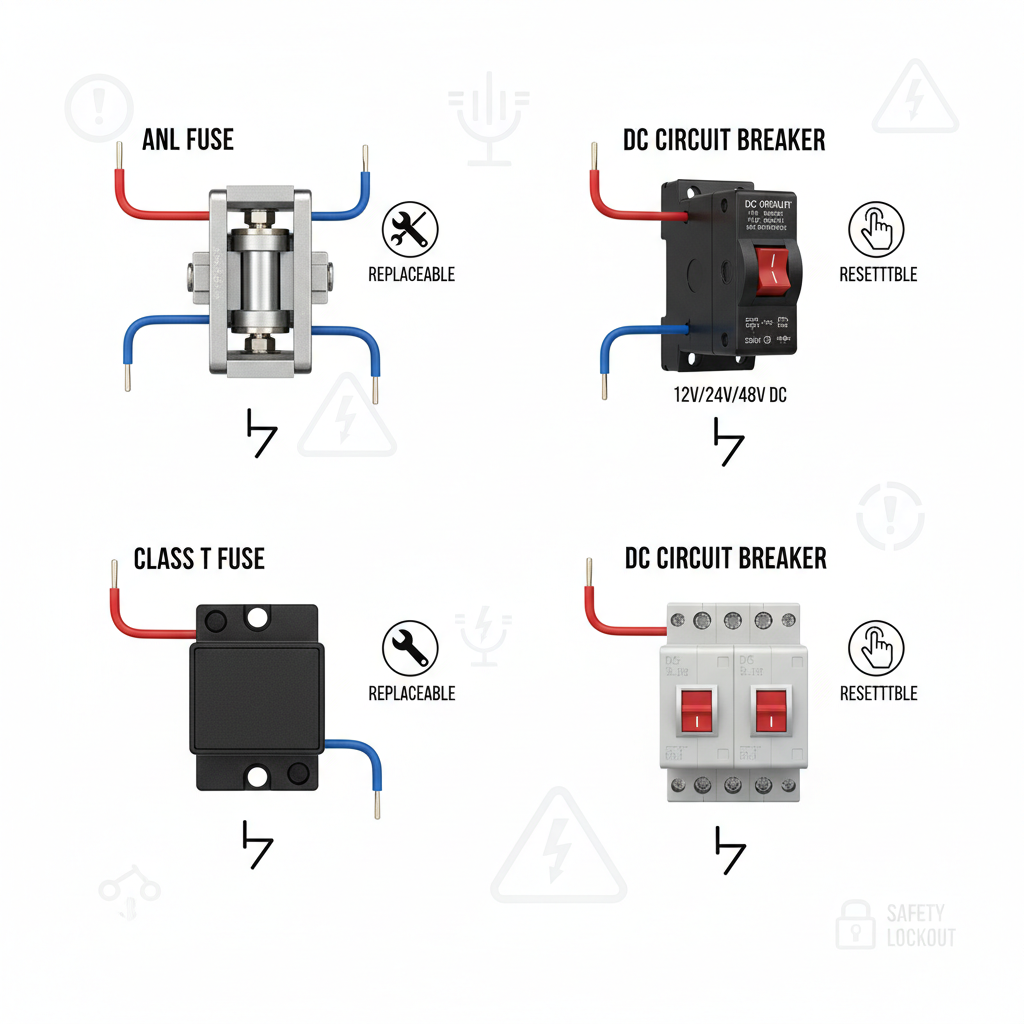
When building your DIY solar system, choosing between solar fuses and circuit breakers can feel overwhelming. However, understanding overcurrent protection is absolutely crucial for keeping your solar installation safe and code-compliant. Let’s dive into when to use each component and how they protect your investment.
Both fuses and circuit breakers serve the same basic purpose: they interrupt electrical current when it exceeds safe levels. Nevertheless, each has distinct advantages that make them better suited for specific applications in your solar setup.
Understanding Solar Fuses: The Basics
Solar fuses are simple, reliable devices that contain a metal strip designed to melt when current exceeds the rated amperage. Once blown, you must replace the entire fuse to restore power. They’re typically less expensive upfront but require replacement after each overcurrent event.
Most importantly, fuses respond very quickly to overcurrent conditions. This makes them excellent for protecting sensitive components like solar panels and charge controllers. Additionally, they create a complete break in the circuit, ensuring no current can flow until replacement.
Common types include ANL fuses for high-current DC applications and Class T fuses for inverter protection. Furthermore, fuses generate less heat during normal operation compared to circuit breakers.
Circuit Breakers: Resettable Protection
Circuit breakers offer the convenience of resetting without replacement. When an overload occurs, the breaker trips and can be manually reset once the problem is resolved. This makes them ideal for locations where frequent access is needed.
However, circuit breakers are more expensive initially. They also have moving parts that can wear out over time. Despite these drawbacks, their resettable nature makes them popular for main disconnects and frequently accessed protection points.
DC-rated circuit breakers are specifically designed for solar applications. Unlike AC breakers, they can safely interrupt DC current, which doesn’t naturally cross zero like AC current does.
When to Use Solar Fuses vs Circuit Breakers
The decision between solar fuses and circuit breakers depends on several factors. Location, accessibility, and cost all play important roles in making the right choice for your system.
Use fuses when:
- Protecting individual solar panel strings
- Installing equipment in hard-to-reach locations
- Budget constraints are a primary concern
- Maximum protection speed is required
Choose circuit breakers when:
- Easy access for maintenance is available
- Frequent troubleshooting is expected
- Local codes require resettable disconnects
- Long-term convenience outweighs initial cost
Proper Sizing Methods for Overcurrent Protection
Sizing overcurrent protection correctly is critical for system safety. The general rule is to size protection at 125% of the maximum continuous current. This accounts for environmental factors that can increase current flow.
For solar panels, multiply the short-circuit current (Isc) by 1.25. Then, select the next standard fuse or breaker size. For example, if your panel string has an Isc of 10 amps, you’d need 12.5 amp protection, so choose a 15-amp device.
Battery protection requires different calculations. Size protection based on the maximum discharge current your system will draw. This ties directly into your power needs calculations when designing your system.
Furthermore, always consult manufacturer specifications. Some equipment requires specific overcurrent protection ratings that may differ from standard calculations.
Safety Chain Positioning in Solar Systems
Understanding where each protection device fits in your solar safety chain prevents costly mistakes. Each component in your system needs appropriate protection positioned correctly in the electrical path.
Solar panel strings typically use fuses at the combiner box. These protect the wiring between panels and the charge controller. Meanwhile, the charge controller often has built-in protection but may need additional external protection.
Battery banks require protection on both positive and negative sides in many installations. The inverter connection needs robust protection sized for the full inverter current draw. As mentioned in our guide on common wiring mistakes, proper protection placement prevents dangerous conditions.
Installation Best Practices
Proper installation ensures your overcurrent protection actually works when needed. Always install protection devices in suitable enclosures rated for the environment. Outdoor installations require weatherproof housings.
Moreover, use appropriate wire sizing between the protection device and the equipment it protects. Undersized wiring defeats the purpose of overcurrent protection. Additionally, ensure all connections are tight and properly torqued to manufacturer specifications.
Label all protection devices clearly. When troubleshooting occurs, you’ll appreciate knowing exactly what each fuse or breaker protects. This becomes especially important in larger systems with multiple protection points.
Consider accessibility during installation. While fuses can be placed in less accessible locations, ensure you can still reach them for replacement when necessary. Circuit breakers should be easily accessible for resetting.
Maintenance and Troubleshooting Tips
Regular maintenance keeps your overcurrent protection functioning properly. Inspect fuse holders for corrosion or loose connections monthly. Clean terminals with appropriate contact cleaner as needed.
Test circuit breakers periodically by manually tripping and resetting them. This ensures the mechanism operates smoothly. However, avoid unnecessary cycling, as this can wear out the internal components.
When fuses blow repeatedly, investigate the root cause before replacement. Chronic overcurrent conditions indicate system problems that need addressing. Similarly, circuit breakers that trip frequently signal underlying issues requiring attention.
Keep spare fuses on hand for critical system components. Standard sizes like 15, 20, and 30 amps are commonly used. Store them in a dry location to prevent degradation.
For systems with proper battery maintenance, overcurrent events should be rare. Regular system monitoring helps identify potential problems before they cause protection devices to operate.
Code Requirements and Best Practices
National Electrical Code (NEC) requirements govern overcurrent protection in solar installations. Article 690 specifically addresses solar systems and requires protection for various system components.
Local codes may have additional requirements beyond the NEC. Always check with your local authority having jurisdiction (AHJ) before finalizing protection device selection. Some areas require specific types or brands of protection devices.
Professional inspection often focuses heavily on overcurrent protection. Properly sized and installed devices demonstrate your commitment to safety and code compliance. This attention to detail can prevent costly corrections later.
Conclusion: Making the Right Choice
Choosing between solar fuses and circuit breakers ultimately depends on your specific application and priorities. Both provide essential overcurrent protection when properly selected and installed.
Remember that overcurrent protection is just one part of a comprehensive solar safety strategy. Combined with proper system sizing, quality components, and regular maintenance, fuses and circuit breakers keep your solar investment safe for years to come.
Start with manufacturer recommendations and local code requirements. Then, consider your budget, accessibility needs, and maintenance preferences. With careful planning, you’ll choose the right protection for each part of your solar system.