
Thinking about installing solar panel degradation on your home or RV? One of the most common questions I hear from fellow DIY enthusiasts is: “How long will my solar panels actually last?” The truth is, solar panels don’t maintain peak performance forever, but understanding their degradation timeline helps you make smarter investment decisions.
Let’s dive into what you can realistically expect from your solar investment over the next 25 years.
Understanding Solar Panel Degradation Rates
Most quality solar panels degrade at a rate of 0.5% to 0.8% per year. This means after 25 years, your panels will still produce about 80-87% of their original capacity. However, not all panels age equally.
Premium panels from manufacturers like SunPower or Panasonic often have degradation rates as low as 0.25% annually. Meanwhile, budget panels might degrade faster at 0.8% or higher per year.
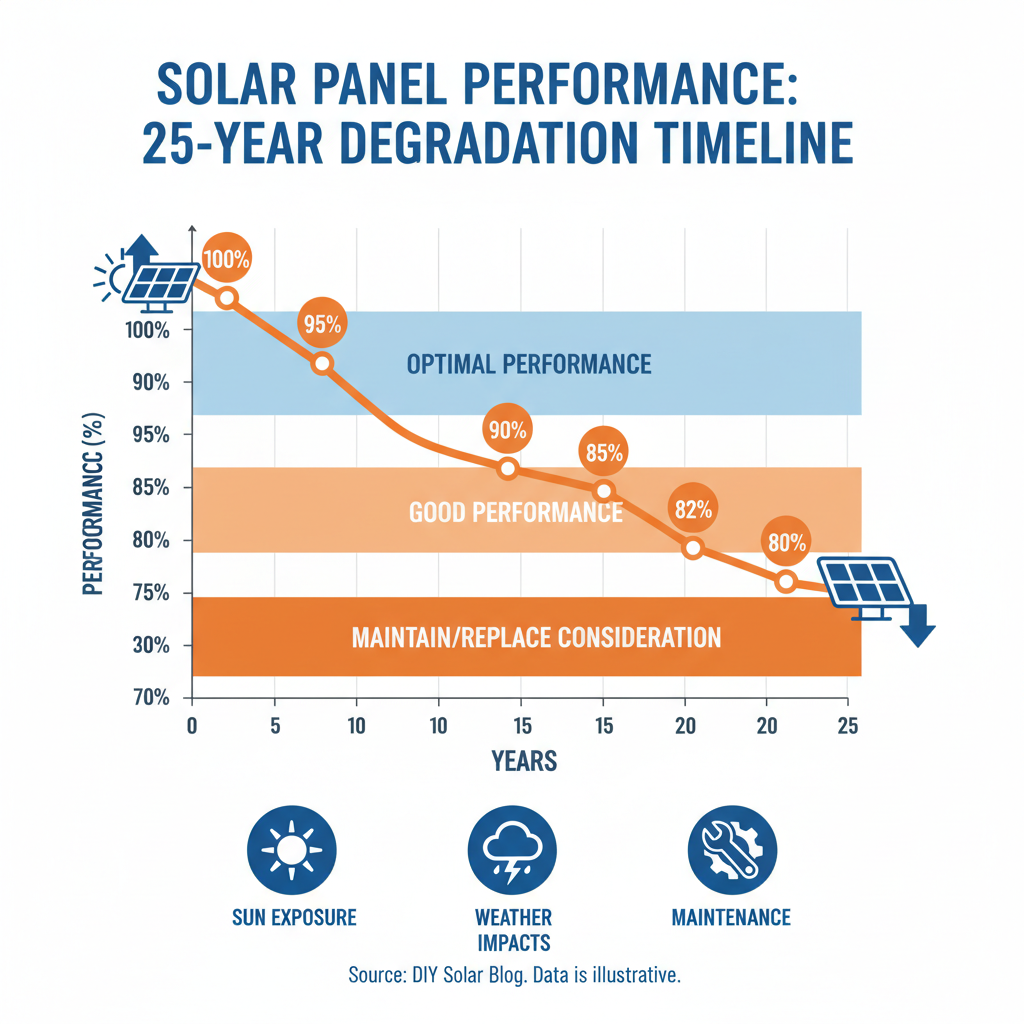
Here’s what this looks like in real numbers:
- Year 1: 100% output
- Year 10: 92-95% output
- Year 20: 84-90% output
- Year 25: 80-87% output
This gradual decline is why proper solar panel sizing matters so much upfront. You want to account for this natural aging process.
What Causes Solar Panel Degradation?
Several factors contribute to solar panel degradation over time. Understanding these helps you minimize their impact through proper maintenance and installation.
UV Exposure and Weather
Constant exposure to UV radiation gradually breaks down the materials in solar cells. Additionally, temperature cycling from hot days to cool nights causes expansion and contraction stress.
Extreme weather events like hail, high winds, or snow loads can also accelerate wear. That’s why winter solar maintenance is crucial for system longevity.
Potential Induced Degradation (PID)
PID occurs when voltage differences between solar cells and their frame cause power losses. This primarily affects older or lower-quality panels, especially in high-temperature, high-humidity environments.
Proper grounding and quality inverters help prevent PID issues.
Light Induced Degradation (LID)
Most panels experience a small power drop (1-3%) within their first few hours of sun exposure. This initial degradation stabilizes quickly and is separate from long-term aging.
Warranty Expectations vs Reality
Most solar panels come with 20-25 year performance warranties guaranteeing 80% output after two decades. However, these warranties have specific conditions.
Manufacturers typically warrant:
- 90% power output after 10 years
- 80% power output after 20-25 years
- Linear degradation between these points
In reality, many panels perform better than warranty minimums. Studies show high-quality panels often retain 85-90% capacity after 25 years.
But here’s the catch: warranty claims require proper documentation and professional testing. Keep installation records, maintenance logs, and performance data from day one.
Monitoring Your System for Early Warning Signs
Regular monitoring helps you catch problems before they become expensive repairs. Here’s what to watch for:
Performance Monitoring
Track your system’s daily, monthly, and annual energy production. A sudden drop might indicate issues beyond normal solar panel degradation.
Most modern inverters provide monitoring apps that make tracking easy. Look for production drops exceeding 10% compared to similar weather days from previous years.
Visual Inspections
Walk your system monthly (safely!) and check for:
- Cracked or discolored panels
- Loose connections or damaged wiring
- Debris buildup affecting performance
- Signs of animal damage or nesting
Regular DIY solar panel cleaning not only maintains efficiency but gives you close-up inspection opportunities.
Common Problems That Accelerate Degradation
While normal aging is inevitable, certain issues can dramatically accelerate solar panel degradation. Addressing these early saves money long-term.
Hot Spots
Hot spots occur when individual cells overheat due to shading, damage, or manufacturing defects. These create permanent damage and reduce panel lifespan.
Thermal imaging cameras can identify hot spots before they cause visible damage. Many solar installers offer periodic thermal inspections.
Micro-Cracking
Hairline cracks in solar cells reduce power output and can spread over time. These often result from thermal stress, hail damage, or installation mistakes.
Avoiding common solar panel wiring mistakes during installation prevents unnecessary stress on your panels.
Corrosion and Water Damage
Water intrusion around frame edges or junction boxes accelerates degradation. Proper sealing during installation and regular maintenance prevent most water issues.
Check and replace worn seals before they fail completely.
Maximizing Your Solar Investment Lifespan
Smart planning from day one helps you get maximum value from your solar investment despite inevitable degradation.
Size Your System Appropriately
When calculating your initial system size, factor in 15-20% degradation over 25 years. This ensures your system meets your needs throughout its lifespan.
Use comprehensive solar panel sizing guides that account for long-term performance decline.
Choose Quality Components
Premium panels with lower degradation rates cost more upfront but provide better long-term value. The same goes for inverters, mounting hardware, and wiring.
Quality components also make battery maintenance easier if you’re building a complete off-grid system.
Professional vs DIY Installation
While I’m a huge advocate for DIY solar, proper installation techniques significantly impact panel longevity. If you’re unsure about mounting, grounding, or electrical work, consult professionals for critical components.
Poor installation can void warranties and accelerate degradation through mechanical stress or electrical issues.
When to Consider Panel Replacement
Most solar panels will outlast their warranties, but eventually replacement makes financial sense. Consider replacement when:
- Output drops below 70% of original capacity
- Physical damage affects significant portions of your array
- Newer technology offers substantially better efficiency
- Repair costs exceed replacement value
The good news? By the time your panels need replacement, solar technology will likely be even more efficient and affordable than today.
Planning for the Long Haul
Solar panel degradation is predictable and manageable with proper planning. Most DIY solar enthusiasts will enjoy 25+ years of reliable power with minimal intervention.
Start with quality components, size your system appropriately, and maintain it regularly. Your solar investment will pay dividends for decades, even as performance gradually declines.
Remember, even after 25 years at 80% capacity, your panels are still producing valuable electricity. Many systems continue operating efficiently well into their third decade with proper care.
The key is setting realistic expectations and planning accordingly from day one. Solar power remains one of the best long-term investments you can make for energy independence.