
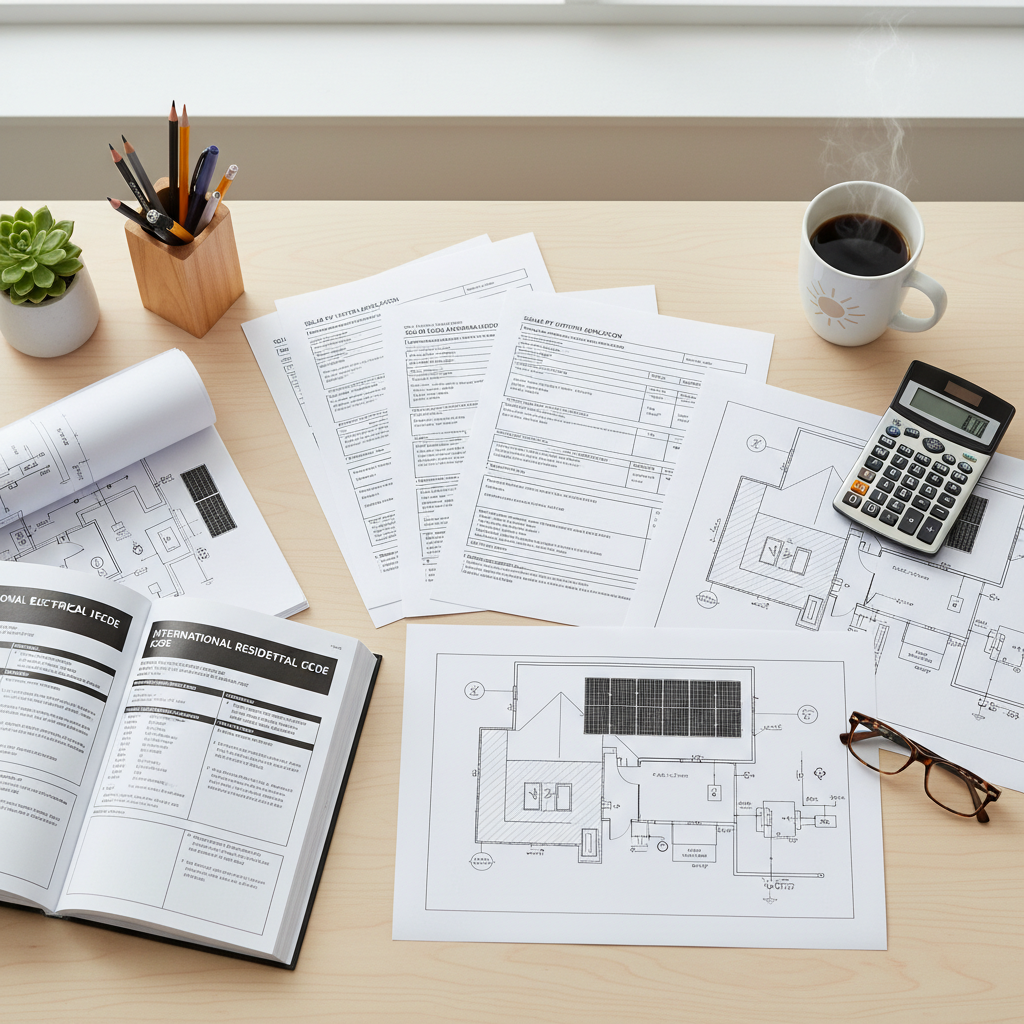
Getting DIY solar permits feels like trying to decode ancient hieroglyphics written by caffeinated bureaucrats who speak exclusively in code references. I learned this the hard way when my first permit application came back looking like a teacher’s red pen exploded on it.
The good news? Solar permits aren’t actually designed to torture you. They exist because electricity can kill people, and nobody wants your DIY solar system to burn down the neighborhood. Once you understand what inspectors actually care about, the whole process becomes surprisingly manageable.
What Makes Solar Permits Different
Solar permits aren’t just electrical permits with fancy names. They combine electrical, structural, and fire safety codes into one delightful bureaucratic sandwich.
Most jurisdictions require permits for any solar system over 1000 watts tied to your home’s electrical panel. Portable systems and small RV setups usually fly under the radar. But if you’re mounting panels on your roof or connecting to your main electrical panel, you’re in permit territory.
The three main code areas you’ll encounter:
- National Electrical Code (NEC) – How to wire everything safely
- International Building Code (IBC) – Structural and fire setback requirements
- Local amendments – Where your city adds its own special flavor of confusion
NEC Requirements That Actually Matter for DIY Solar
The National Electrical Code isn’t light reading. It’s 900 pages of electrical regulations that would cure insomnia if it weren’t so important for not dying.
For DIY solar permits, focus on these key NEC sections:
Article 690 covers solar photovoltaic systems. This is your bible. It covers everything from equipment grounding to disconnects to wire sizing. The most common DIY violations I see involve improper grounding and missing rapid shutdown devices.
Before you size your system, make sure you understand proper solar panel sizing calculations. Inspectors will check your math, and oversized systems create safety hazards.
Grounding requirements are non-negotiable. Your system needs both equipment grounding (green wire) and grounding electrode conductors. Get this wrong and your permit gets rejected faster than a soggy pizza delivery.
Rapid shutdown compliance became mandatory in 2017. Your system must shut down to safe voltage levels within 30 seconds when the main breaker trips. This usually means power optimizers or microinverters for roof-mounted systems.
Wire Sizing and Protection
Undersized wires cause fires. Oversized wires waste money but don’t hurt anything except your wallet.
Use our solar wire gauge calculator to get this right the first time. Inspectors will verify your calculations, especially for long wire runs where voltage drop matters.
Every circuit needs proper overcurrent protection. Solar fusing requirements aren’t suggestions – they’re literally what prevents your system from catching fire when something goes wrong.
Structural and Fire Code Requirements
Building codes care about two things: will your panels fall off and kill someone, and can firefighters still do their job?
Roof loading calculations matter more than you think. Snow loads, wind loads, and dead loads all factor into whether your roof can handle the extra weight. Most residential roofs handle standard solar installations fine, but you need to prove it on paper.
Fire setbacks aren’t optional. Most codes require 3-foot clearances from roof edges and ridges. This gives firefighters room to work and prevents panels from blocking emergency ventilation.
The exact requirements vary by jurisdiction, but the principle stays consistent: leave room for firefighters to safely access your roof.
Talking to Inspectors Like a Human
Inspectors aren’t the enemy. They’re overworked people trying to keep everyone safe while dealing with contractors who think rules are suggestions.
Show up prepared. Bring your permit, approved plans, and any relevant code references. If you made changes during installation, document them clearly.
Speak their language: Use proper electrical terminology. Don’t call your charge controller a “battery charger” or your combiner box a “junction box.” Learn the difference between AC and DC disconnects.
Admit what you don’t know. “I’m not sure about that requirement, can you show me where it’s referenced?” works better than making stuff up. Most inspectors appreciate honest questions over confident BS.
Document everything. Take photos of your installation before calling for inspection. If they find issues, you’ll have reference photos for fixes.
Common Inspection Failures
Learn from my mistakes and everyone else’s:
- Missing or improper labels on disconnects
- Inadequate grounding connections
- Wrong wire types (USE-2 for DC, THWN for AC)
- Missing rapid shutdown labeling
- Improper mounting hardware or flashing
DIY Solar Permit Application Strategy
Start with your local building department’s website. Most have solar permit checklists and application forms. Some even have example drawings showing what they want to see.
Plan submittal requires several documents:
- Site plan showing panel locations and setbacks
- Single-line electrical diagram
- Equipment specification sheets
- Structural calculations (if required)
- Interconnection application for grid-tied systems
Your electrical diagram doesn’t need CAD software. Hand-drawn is fine as long as it’s clear and accurate. Show all major components, wire gauges, fuse sizes, and disconnects.
Include equipment spec sheets for everything: panels, inverters, racking, disconnects. Inspectors need to verify that everything meets code requirements.
Timeline and Costs
Permit review takes anywhere from 2 weeks to 2 months, depending on your jurisdiction’s workload. Plan accordingly.
Costs vary wildly. Some areas charge flat fees around $200-500. Others calculate based on system size or home value. Budget for both plan review and inspection fees.
When DIY Solar Permits Make Sense
Not every solar project needs permits, and not every permitted project should be DIY.
Good DIY permit candidates:
- Ground-mounted systems under 10kW
- Simple roof layouts without complex wiring
- Standard residential construction
- Jurisdictions with clear solar permit processes
Consider hiring help for:
- Complex electrical panel upgrades
- Historic or unusual home construction
- Commercial installations
- Areas with hostile permit departments
Remember that permits protect you too. If something goes wrong with an unpermitted system, your insurance company might decline coverage. That’s an expensive way to save a few hundred dollars in permit fees.
Making Solar Permits Less Painful
The permit process isn’t fun, but it’s manageable once you understand what inspectors actually care about. Focus on safety, use proper terminology, and don’t try to cut corners on requirements that exist for good reasons.
Your DIY solar system needs to meet the same safety standards as professional installations. The permit process ensures that happens, even if it feels like bureaucratic torture while you’re going through it.
Take it one step at a time, ask questions when you’re confused, and remember that every successful DIY solar installer has navigated this same maze. You’ll get through it too – probably with fewer mistakes than I made.