
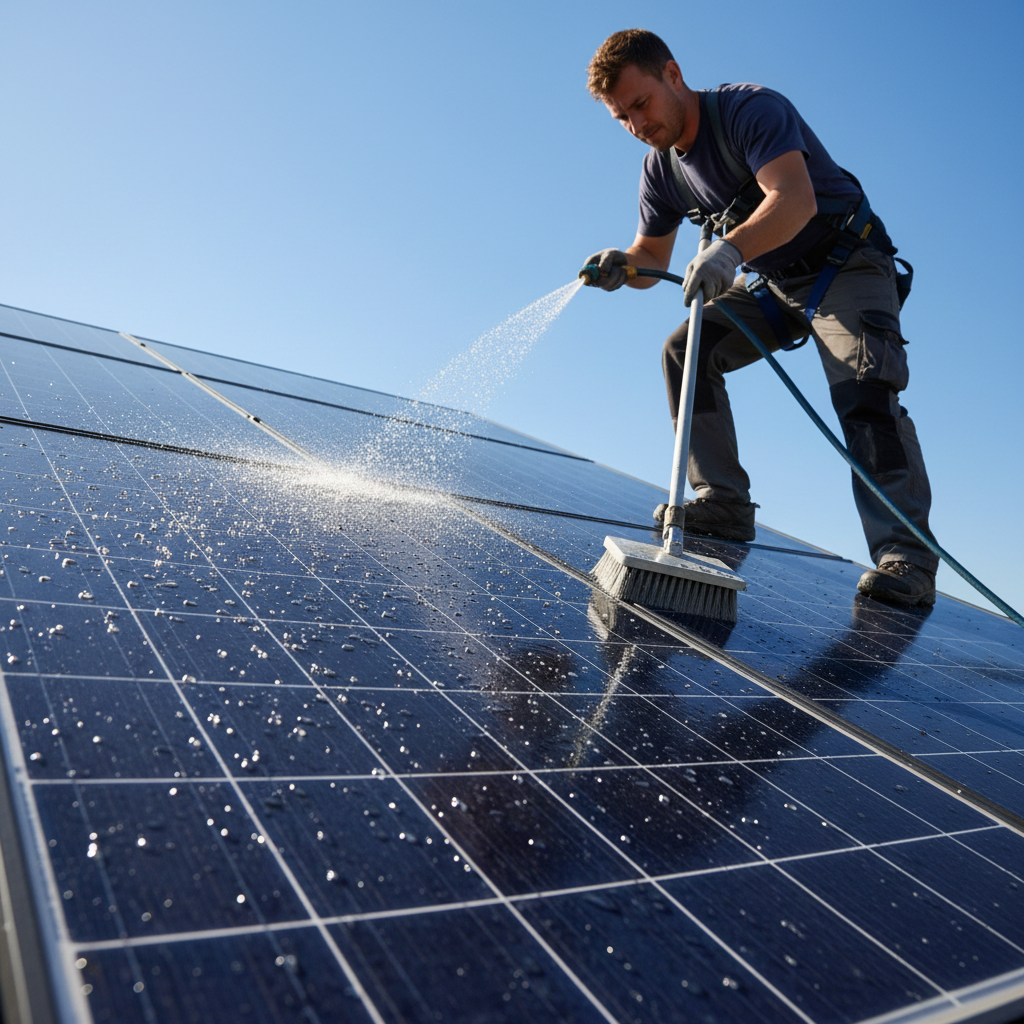
Let me guess. You’ve read seventeen different articles about solar panel cleaning and now you’re convinced you need specialized brushes, distilled water, and a PhD in surface chemistry. I’ve been there too. Spent way too much money on cleaning gadgets that promised to boost my power output by 30%.
Here’s the truth: most panels clean themselves better than you think. And most cleaning advice online is either useless or genuinely dangerous for your investment.
Why Most Solar Panel Cleaning Advice is Garbage
The internet loves overcomplicated solutions. Especially when money’s involved.
I’ve seen guides recommending everything from specialized soaps to pressure washers. Some suggest cleaning monthly. Others swear by dawn-to-dusk cleaning schedules based on lunar cycles. Okay, I made that last one up, but barely.
The reality? Your panels are designed to handle decades of weather. They’re not delicate flowers.
Most cleaning advice ignores basic physics. Rain does most of the work. Wind handles the rest. Your job is mostly staying out of the way.
The Snake Oil Hall of Fame
Here are the cleaning “solutions” that separate you from your money without improving performance:
Specialized solar panel soap: Regular water works fine. These panels sit outside in storms. They don’t need aromatherapy.
Distilled water requirements: Unless you live somewhere with extremely hard water, tap water won’t leave enough mineral deposits to matter.
Anti-static treatments: Physics doesn’t work that way. Dust accumulation isn’t about static charge.
Monthly deep cleaning schedules: You’ll spend more on cleaning supplies than you’ll gain in power output.
What Actually Affects Solar Panel Cleaning Performance
Let’s talk numbers instead of marketing hype.
A completely dirty panel might lose 20-25% efficiency. But “completely dirty” means covered in thick mud or bird droppings. Regular dust? Maybe 5% on a really bad day.
I tested this on my own system. Measured output before and after cleaning panels that looked pretty dusty. The difference? About 3% power increase. That’s roughly $2 worth of electricity per month on my 5kW array.
The cleaning supplies cost more than the power gain.
When Cleaning Actually Matters
There are times when manual cleaning makes sense:
Bird droppings: These stick and block significant panel area. Clean them promptly.
Tree sap or pollen: Sticky substances that rain can’t remove easily.
Construction dust: Fine particles that cement themselves after getting wet.
Coastal salt spray: Can create stubborn residue in some climates.
Notice what’s not on this list? Regular dust accumulation from normal weather.
The Right Way to Clean Solar Panels (When You Actually Need To)
When cleaning is necessary, keep it simple and safe.
Safety first: Panels are slippery when wet. Electricity and water don’t mix. Work from the ground when possible.
Cool panels only: Clean early morning or late evening. Hot panels can crack from thermal shock with cold water.
Gentle approach: Garden hose with spray attachment. Soft brush if needed. No pressure washers.
That’s it. Water and maybe a soft brush for stubborn spots.
The Equipment You Actually Need
Skip the specialty gear. Here’s what works:
Garden hose with adjustable nozzle: For reaching roof-mounted panels safely.
Squeegee on extension pole: Window cleaning squeegees work fine.
Soft-bristled brush: Car wash brushes are perfect. Nothing abrasive.
Total cost: under $30. Compare that to “professional” solar cleaning kits at $200+.
Ground Mount vs Roof Mount Cleaning Reality
Panel location changes everything about cleaning necessity and safety.
Ground-mounted systems: Easier to clean, but collect more dust and debris. Worth checking monthly and cleaning when visibly dirty.
Roof-mounted panels: Self-clean better due to rain runoff angles. Harder to access safely. Clean only when absolutely necessary.
I’ve got both setups. The ground mount needs attention 3-4 times per year. The roof panels? Maybe once, if that.
Before you size your system, consider that proper solar panel sizing matters more than perfect cleanliness for long-term performance.
RV Solar Panel Cleaning Considerations
RV panels face unique challenges. Road dust, tree coverage, and limited water access change the game.
Clean RV panels more frequently during travel season. They collect road grime that stationary panels never see. But you’re also changing locations regularly, so dust patterns reset.
Pack a spray bottle and squeegee. Clean panels when you wash the RV. Don’t make it a separate chore.
Monitoring vs Cleaning: What Actually Improves Output
Here’s what I wish someone told me earlier: monitoring beats cleaning every time.
Instead of obsessing over panel cleanliness, focus on proper system testing and monitoring. Shading issues, wiring problems, and inverter faults cause bigger power losses than dust ever will.
I spent months worrying about cleaning schedules while ignoring voltage drop in my DC wiring. That wiring issue cost me 15% efficiency. All the cleaning in the world wouldn’t fix it.
The Numbers Don’t Lie
Track your actual power output. Most monitoring systems show daily, weekly, and monthly production.
If output drops suddenly, check for equipment issues first. Gradual decline over months might indicate cleaning needs, but sudden drops mean something’s broken.
Weather affects output more than dirt. Don’t clean panels because of one cloudy week.
Regional Cleaning Considerations That Actually Matter
Climate affects cleaning needs more than most guides admit.
Desert areas: Fine dust accumulates quickly but rain washes it off completely. Clean after dust storms, then wait for nature.
Coastal regions: Salt spray creates stubborn residue. Monthly rinsing prevents buildup.
Forested areas: Pollen and tree debris stick to panels. Clean seasonally during heavy pollen periods.
Urban environments: Pollution creates film over time. Clean when panels look visibly hazy.
Your location matters more than generic cleaning schedules.
Professional Cleaning: When It Makes Sense
Sometimes paying someone else makes sense. But not for the reasons most companies advertise.
Large commercial arrays: Economies of scale work here. Professional equipment and bulk pricing.
Difficult roof access: Safety trumps DIY pride. Don’t risk injury over a few percentage points of power.
Physical limitations: If you can’t safely clean panels yourself, hire help.
For typical residential systems? You’ll probably spend more than you’ll save.
Questions to Ask Cleaning Companies
If you do hire help, ask the right questions:
“What’s your insurance coverage for panel damage?” They should carry specific solar panel insurance.
“Do you provide before/after power measurements?” Anyone claiming 30% improvements should prove it.
“What’s your cleaning schedule recommendation?” Run from anyone suggesting monthly service.
The Bottom Line on Solar Panel Cleaning
Skip the hype. Focus on what works.
Clean when panels are visibly dirty with stuck-on debris. Use water and gentle scrubbing. Don’t overthink it.
Your time and money are better spent on proper system monitoring, shade analysis, and equipment maintenance.
Mother Nature handles most solar panel cleaning duties. Let her do her job while you focus on the parts of your system that actually need attention.
Remember: dirty panels still make power. Broken systems don’t.