
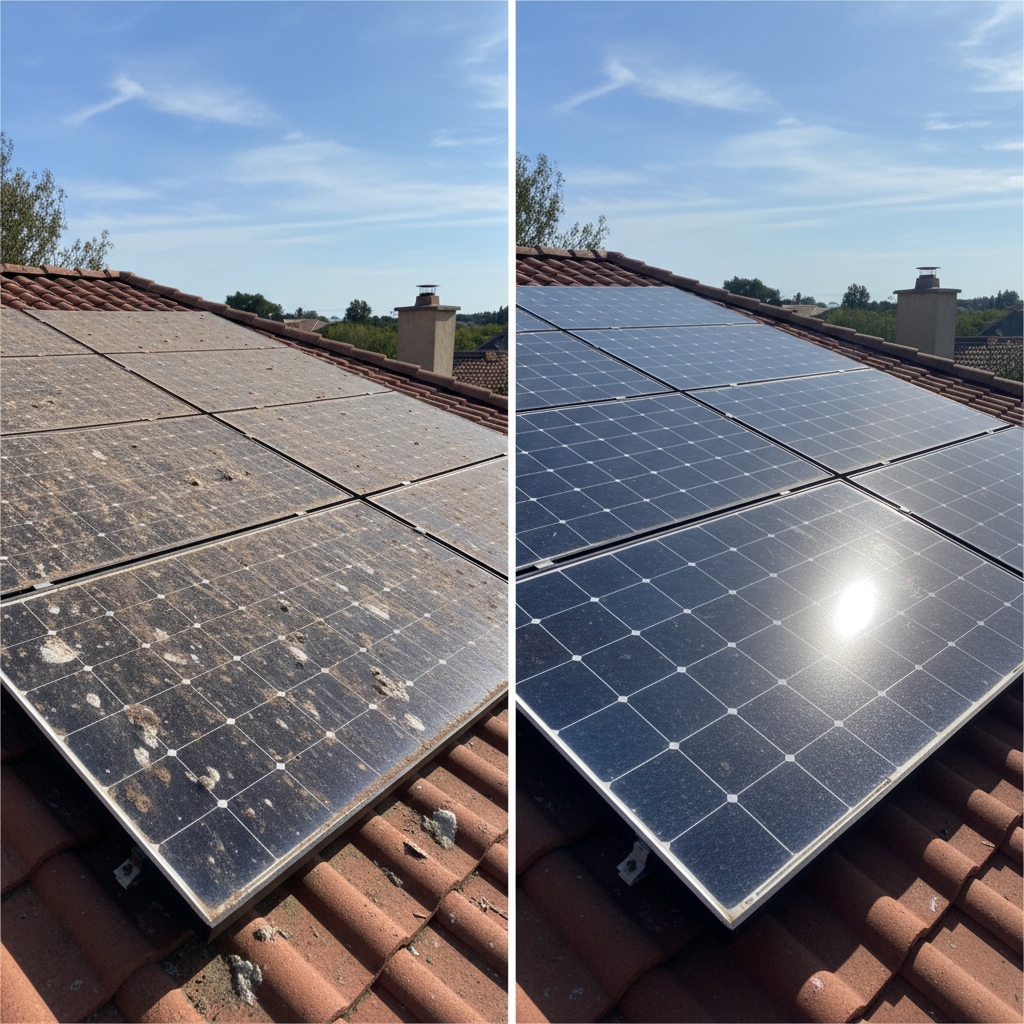
I learned about solar panel cleaning the hard way. Watched my power production drop by 25% over six months and blamed everything except the obvious film covering my panels. Turns out that “minor dust” was costing me serious watts every single day.
Don’t be me. Let’s talk about when cleaning actually matters and how to do it without turning your panels into expensive frisbees.
Why Solar Panel Cleaning Actually Matters
That innocent-looking layer of dust isn’t just cosmetic. It’s a power thief.
Even a thin film reduces light transmission. Your panels can’t convert photons they can’t see. Less light equals fewer electrons equals less power in your batteries.
The math is brutal:
- Light dust: 5-15% power loss
- Moderate buildup: 15-25% power loss
- Heavy grime: 25-40% power loss
I’ve measured this personally. My 400W panels were producing like 300W panels after a dusty spring. That’s not “close enough” when you’re trying to size your solar system correctly.
When Solar Panel Cleaning Is Worth Your Time
Not all dirt is created equal. Some situations demand immediate attention.
Clean immediately if you see:
- Bird droppings (they’re like tiny solar eclipses)
- Tree sap or pollen (sticky stuff attracts more dirt)
- Dust storms or construction debris nearby
- Noticeable power drops during sunny days
Regional factors that matter:
Desert areas need monthly cleaning. I know RV folks in Arizona who clean weekly during dust season. Meanwhile, my friend in Oregon cleans twice a year and calls it good.
Agricultural areas are sneaky dirty. Harvest season kicks up fine particles that settle everywhere. Your shade analysis won’t help if your panels look like they’re wearing brown sweaters.
The Stupidly Simple Solar Panel Cleaning Method
Forget the fancy equipment. You need three things: water, a soft brush, and common sense.
My foolproof process:
- Wait for cool panels (early morning or evening)
- Rinse with garden hose first
- Gentle scrub with soft brush and soapy water
- Final rinse
- Let air dry
That’s it. No special cleaners. No squeegees. No drama.
Critical safety notes:
Hot panels plus cold water equals cracked glass. Always clean when panels are cool. If you can’t touch the frame comfortably, wait.
Never walk on panels. Ever. I don’t care how sturdy they look. Use a ladder or extension brush instead.
What Not to Do (Lessons From My Mistakes)
I’ve broken exactly one panel in five years of DIY solar. Guess how?
Pressure washer on a hot summer day. Thermal shock turned my 400W panel into modern art. Expensive modern art.
Avoid these amateur moves:
- Abrasive cleaners or scrubbers
- Cleaning chemicals (dish soap is plenty)
- Metal scrapers for stubborn spots
- Cleaning during peak sun hours
If bird droppings are cement-hard, soak them first. Let water do the work. Your patience is cheaper than new panels.
The ROI of Solar Panel Cleaning
Let’s do math. Because math doesn’t lie.
Say your system produces 30 kWh per day when clean. Even 15% reduction means losing 4.5 kWh daily. Over a month, that’s 135 kWh.
If you’re running batteries, those lost kilowatt-hours come from the grid at peak rates. Or your generator burns extra fuel. Either way, it costs real money.
Cleaning takes me 30 minutes for eight panels. Worth it every single time.
Tools That Actually Work
Skip the marketing nonsense. Here’s what works in the real world:
Essential gear:
- Garden hose with adjustable nozzle
- Soft bristle brush (car wash brush works perfectly)
- Squeegee (if you want streak-free results)
- Extension pole for high panels
Nice-to-have additions:
- Water fed pole system (for roof installations)
- Deionized water (prevents mineral spots)
- Leaf blower (for dry debris removal)
I spent $200 on a fancy solar cleaning kit once. Used the brush and threw away everything else. Save your money.
Seasonal Solar Panel Cleaning Strategy
Different seasons demand different approaches.
Spring: Pollen season requires frequent attention. Weekly rinses prevent buildup. This is when I check my MPPT controller settings too.
Summer: Bird activity peaks. Inspect weekly, clean as needed. Hot panels mean early morning cleaning only.
Fall: Leaves and debris season. Daily inspection during heavy leaf fall. A leaf blower handles most of this.
Winter: Snow slides off clean panels better than dirty ones. Light cleaning before storm seasons helps.
Monitoring Your Cleaning Results
How do you know if cleaning actually helped?
Watch your production numbers. Most charge controllers track daily kilowatt-hours. Compare pre and post-cleaning production on similar weather days.
I keep a simple log:
- Date cleaned
- Condition before cleaning
- Next day’s production vs. recent average
Data beats guessing. Always.
When to Call Professionals
Sometimes DIY isn’t the answer.
Consider professionals if:
- Panels are dangerously high or steep
- You’re physically unable to safely access them
- System is under warranty requiring certified cleaning
- Commercial installation with liability concerns
Professional cleaning costs $100-200 for residential systems. Cheaper than emergency room visits or broken panels.
The Bottom Line on Solar Panel Cleaning
Clean panels produce more power. Period.
The difference between clean and dirty panels can easily exceed 20% in real-world conditions. That’s like getting an extra panel for free.
Start simple. Garden hose and soft brush handle 90% of situations. Monitor your results. Develop a routine that matches your local conditions.
Your panels work hard converting sunlight into usable power. Give them a clear view of the sky, and they’ll reward you with consistent, maximum production.
Trust me on this one. My power bills prove it.